Trauma-Informed vs Trauma-Responsive and Cultural Sensitivity vs Cultural Humility
A child shuts down in class. The adult knows stress may be part of the story, yet the response stays the same: “Finish your work.” That gap matters because children feel responses, not intentions.
This shows up everywhere, in schools, homes, counseling rooms, libraries, and community programs.
Many adults care, read, train, and try. Still, awareness alone doesn’t change what a child experiences in the moment. The gap begins with how we define these terms.
Trauma-informed means understanding how trauma affects behavior. Trauma-responsive means changing how you respond because of that understanding.
Cultural sensitivity recognizes differences. Cultural humility adjusts expectations based on those differences.
FREE DOWNLOAD · REFLECTION GUIDE
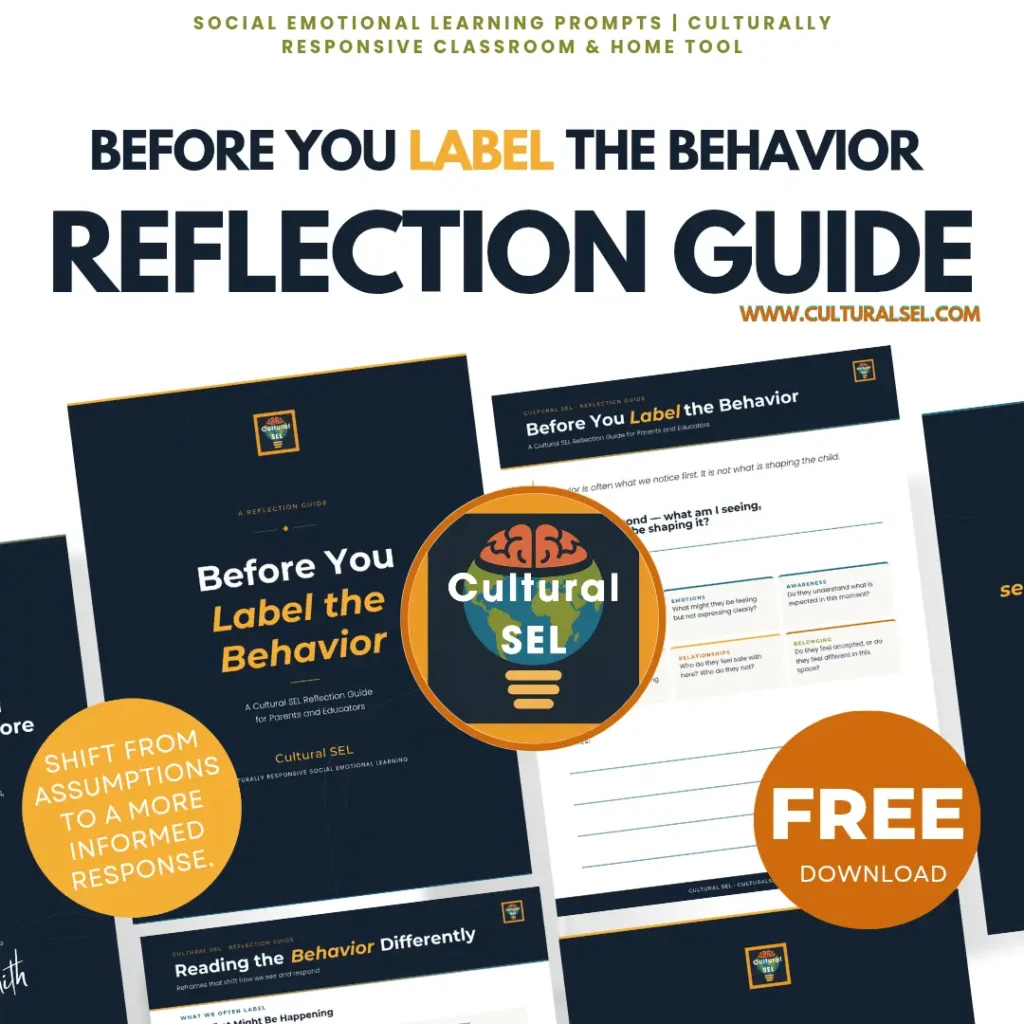
What if the behavior isn’t the whole story?
A free reflection guide that explores what may be influencing a child’s behavior before it is labeled, corrected, or misunderstood.
Clear Definitions of Trauma-Informed, Trauma-Responsive, Cultural Sensitivity, and Cultural Humility
These four terms sound close, but they lead to different adult choices.
| Term | What it means | What a child experiences |
|---|---|---|
| Trauma-informed | The adult knows trauma can affect behavior, trust, attention, and regulation. | The adult may understand the behavior better. |
| Trauma-responsive | The adult changes the response in real time. | The child gets support that matches their state. |
| Cultural sensitivity | The adult recognizes cultural differences. | The child may feel seen at a surface level. |
| Cultural humility | The adult questions their own norms and adjusts with family input. | The child is less likely to be judged by one standard. |
Trauma-Informed Means Awareness of Impact
A trauma-informed adult knows that stress can shape silence, avoidance, irritability, shutdown, or fast emotional shifts. That knowledge often comes from training, books, or practice.
For example, a teacher may recognize that a child who freezes during group work could be overwhelmed, not careless. That matters, because it changes the story the adult tells about the child.
Trauma-Responsive Means Action Based on That Awareness
A trauma-responsive adult does more than notice. The response shifts right away. Tone softens, pressure drops, and timing changes.
For example, instead of calling on the child in front of peers, the adult checks in privately and gives time to regulate before asking for participation.
Cultural Sensitivity Recognizes Difference Without Changing Practice
Cultural sensitivity means an adult knows families may define respect, communication, and behavior in different ways. Still, that awareness can stay on the surface.
An adult may say they value culture, yet still expect eye contact, quick answers, and one style of participation from every child.
Cultural Humility Adjusts Behavior and Expectations Based on Context
Cultural humility is ongoing. The adult does not assume their norm is the norm. Family voice matters, and practice changes as new understanding grows.
For example, before calling a child rude for looking away, the adult asks how respect is shown at home. That question can prevent harm.
Trauma-Informed Practice Does Not Automatically Change Adult Responses
Knowing a child’s history does not interrupt habit by itself. Adults can understand the backstory and still use the same correction, same tone, and same demand.
A student avoids work. The adult knows the child has had major stress. Yet the child is still labeled unmotivated, off-task, or resistant. The behavior gets corrected, but the cause stays untouched.
Children notice what adults do under pressure. That is where trust rises or drops.
Repeated reminders often show this gap. “Get started.” “Focus.” “You know what to do.”
The adult may believe they are being supportive because they understand the child has a hard time. Meanwhile, the child hears the same message without a new path forward.
Compliance can increase in these settings. Trust often drops. A child may obey because the power gap is clear, while still feeling unseen.
Trauma-Responsive Practice Changes Real-Time Adult Decisions
Trauma-responsive practice changes what happens in the moment. The adult reads behavior through experience, then responds with support before performance.
Silence may mean overwhelm. Avoidance may mean fear of failure. A sharp tone may signal stress, not disrespect. This does not remove limits. It changes how adults reach the limit.
A responsive adult might offer a quiet space, reduce the task, or allow written participation before speaking aloud. The expectation stays clear, but the path becomes possible.
That shift matters in SEL settings. A child cannot practice self-management well when their body is still in alarm. Regulation comes first because learning depends on it.
Cultural Sensitivity Often Stops at Acknowledgment, Cultural Humility Changes Practice
Many adults recognize cultural difference and still keep one standard in place. They celebrate holidays, post diverse books, and use respectful language.
Yet they may still correct children for tone, pause time, body language, or ways of showing respect that differ from school norms.
Eye contact is a common example. In some homes, direct eye contact with adults is expected. In others, looking down shows respect. If an adult reads one pattern as honest and the other as rude, the child pays the price.
Cultural humility asks the adult to examine their own assumptions. Why do I read quick verbal response as engagement? Why do I read quiet as lack of confidence? Which behaviors do I call “appropriate,” and whose standard is that?
Family context sharpens this work. When adults ask caregivers how a child communicates, handles stress, or shows respect at home, they get meaning that behavior charts can’t provide.
Expectations stay clear, but there can be more than one acceptable way to meet them.
Children Experience the Gap Between Awareness and Action
When adults stop at awareness, labels often fill the space. A child becomes defiant, shy, disengaged, disrespectful, dramatic, or uncooperative.
Those labels may sound small, but children live inside them. They begin to notice which parts of themselves bring correction.
Then they adapt. Some withdraw. Some mask. Some escalate because escalation gets noticed faster than quiet distress.
This gets harder when home and school define behavior in different ways. One setting may value waiting before speaking.
Another rewards quick verbal participation. One adult may read a child as polite. Another may call the same child avoidant.
Without support, children code-switch alone. They study the room, guess the rules, and try to stay safe.
When adults across settings don’t compare notes, the same child can be described in completely different ways.
Trauma-Responsive and Culturally Responsive Support Work Best Together
A child’s behavior is shaped by both experience and cultural environments. One without the other leaves gaps.
If an adult sees trauma but ignores culture, they may miss why a child communicates or protects themselves in a certain way.
If an adult sees culture but ignores trauma, they may miss signs of stress, fear, or dysregulation.
Good support starts with interpretation before correction. What is this behavior telling me? What happened before this moment? How might home expectations shape what I am seeing?
Then the adult adjusts instead of repeating the same response. If public prompts increase shutdown, use a private check-in.
If verbal sharing is hard, allow drawing, writing, or partnering first. If confusion spans settings, ask the family what patterns they notice too.
Practical Shifts That Move Adults From Awareness to Response
Small changes often have the biggest effect.
Pause before labeling. A child who refuses may be overwhelmed, embarrassed, or confused.
Check context across settings. Ask what happens at home, in class, in after-school care, and during transitions. Patterns usually tell a clearer story than one isolated moment.
Adjust the response when the first correction fails. Repeating the same direction five times rarely helps. A different entry point often does.
Include families early. They know what calms the child, what triggers stress, and how respect is expressed in daily life.
The Difference in Everyday Language
Trauma-Informed vs Trauma-Responsive
Trauma-informed means, “I know stress can affect this child.”
Trauma-responsive means, “Because I know that, I am changing how I respond right now.”
A simple example helps. A trauma-informed adult sees a child freeze during reading. A trauma-responsive adult offers a shorter passage, private support, and time before asking the child to read aloud.
Cultural Sensitivity vs Cultural Humility
Cultural sensitivity means, “I know families do things in different ways.”
Cultural humility means, “I will not treat my way as the default, and I will adjust after I learn more.”
For example, a culturally sensitive adult knows eye contact can vary. A culturally humble adult asks the family how respect is shown, then responds without shaming the child.
Why This Matters for Social Emotional Learning Outcomes
SEL skills depend on context. A child cannot build self-awareness, empathy, or regulation in a setting that keeps misreading them.
When support matches a child’s reality, skill-building makes sense. The child spends less energy decoding adult reactions and more energy practicing the skill itself.
Belonging matters here. Children participate more when they expect dignity. They take risks when correction feels fair. They regulate better when adults respond with steadiness and context.
What This Looks Like in Practice
In a responsive setting, children have more than one way to participate. They can speak, write, draw, move, or respond one-on-one when needed.
Adults support regulation before asking for performance. They lower pressure, offer structure, and return to the task when the child is ready.
Family input guides decisions. That keeps support grounded in the child’s real life, not adult guesswork.
A child’s behavior often stays the same. What changes is how adults choose to read it.
Children change when adult responses change. Awareness is the start, but response is what builds trust.
In school settings, this shift is not always obvious at first. I have seen a child follow every instruction and still be described as lacking initiative.
When we looked at what initiative meant in that setting, it became clear the child was waiting for permission out of respect, not avoidance.
The response changed once that was understood. The child had been doing what they knew all along.
Children do not need adults who only know the right words. They need adults whose responses make safety, dignity, and belonging real.
FAQ: Trauma-Informed, Trauma-Responsive, Cultural Sensitivity, and Cultural Humility
What is the difference between trauma-informed and trauma-responsive?
Trauma-informed means the adult understands trauma can affect behavior. Trauma-responsive means the adult changes the response in real time. For example, knowing a child shuts down under stress is trauma-informed. Giving that child a private check-in and a smaller task is trauma-responsive.
Why is being trauma-informed not enough for children?
Being trauma-informed means understanding trauma. Being trauma-responsive means changing how you respond in the moment. Without that change, the child still experiences the same pressure.
What is the difference between cultural sensitivity and cultural humility?
Cultural sensitivity recognizes that differences exist. Cultural humility goes further by questioning one’s own assumptions and adjusting practice with family input.
Why does cultural humility matter more than awareness alone?
Awareness can still center one norm. Humility opens space for multiple ways to communicate, show respect, and participate.
How do trauma and culture both influence children’s behavior?
Trauma can shape regulation, trust, and stress responses. Culture can shape communication, body language, silence, and views of respect. Adults need both pieces to interpret behavior well.
What does a trauma-responsive and culturally responsive environment look like?
It includes flexible participation, private check-ins, support for regulation before performance, clear expectations with more than one way to meet them, and family voice in decisions.
How can adults move from awareness to real response?
Pause before labeling. Ask what the behavior may be communicating. Adjust the response when the first one fails. Involve families so patterns make sense across settings.
References and Frameworks
- Substance Abuse and Mental Health Services Administration (SAMHSA) — Trauma-Informed Care Framework
- Collaborative for Academic, Social, and Emotional Learning (CASEL) — Social Emotional Learning Framework
- Tervalon and Murray-García — Cultural Humility concept in healthcare and education
CONTINUE EXPLORING CULTURAL SEL
Explore free Cultural SEL guides, culturally responsive SEL tools, and practical resources for understanding how cultural environments, identity, belonging, relationships, and lived experiences connect with children’s social and emotional development.
📌 Save or share this post with someone who is raising, teaching, or guiding children.

Hi, I’m Faith, the creator of Cultural SEL
I create practical tools and resources that support children’s social and emotional development and help parents, caregivers, educators, and community professionals look beyond behavior labels.
My work focuses on how cultural environments, identity, belonging, relationships, and lived experiences shape what children experience and how adults interpret and respond.
Read more about Faith and Cultural SEL: https://culturalsel.com/about
Join the Cultural SEL community: https://culturalsel.com/fb