What Extracurricular Activities Teach Children About Themselves, Relationships, and Belonging
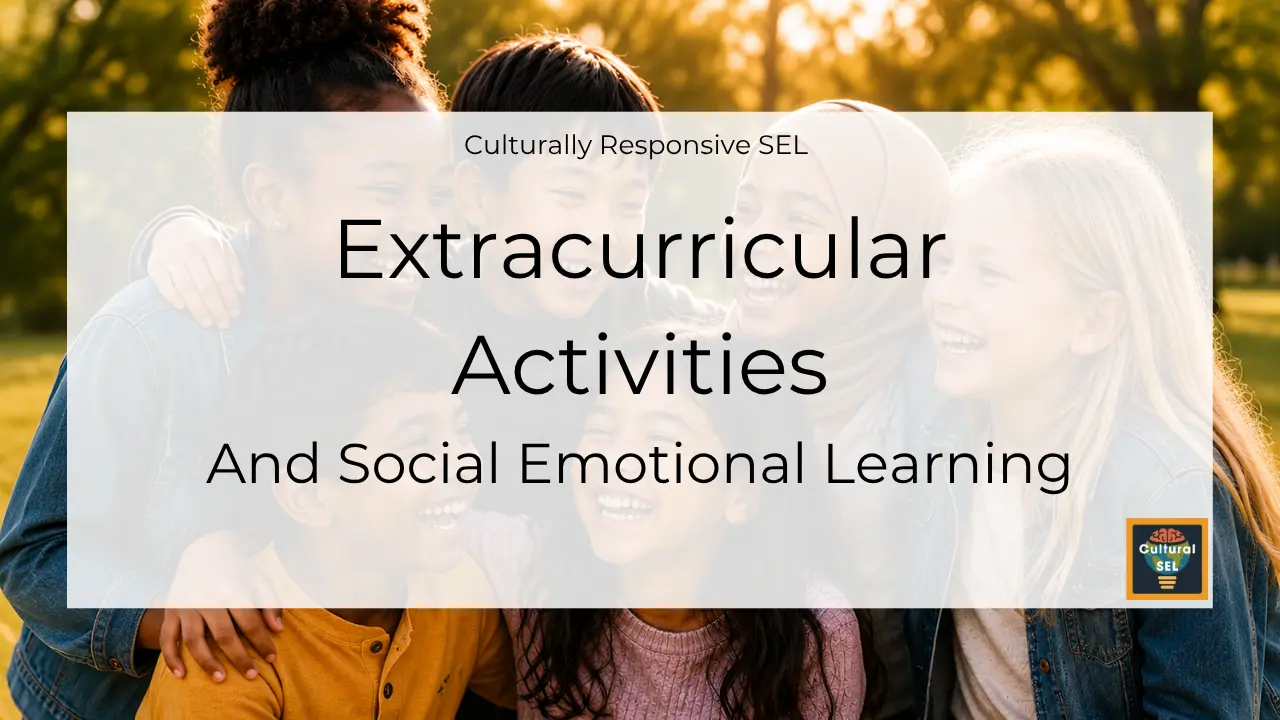
Adults often file extracurricular activities under enrichment, practice, or keeping children busy.
Children usually experience them as social and emotional learning spaces. Social and emotional learning, or SEL, includes managing feelings, building relationships, making choices, and learning who you are in real situations.
A child in dance, football, chess, choir, scouting, or weekend language school is doing more than building a skill. They are handling correction, reading a room, joining a group, and deciding whether they belong there.
Some activities open the door to new people and new settings. Others hold family language, culture, faith, and tradition in place. Many activities become SEL experiences, even when adults never call them that.
FREE DOWNLOAD · REFLECTION GUIDE
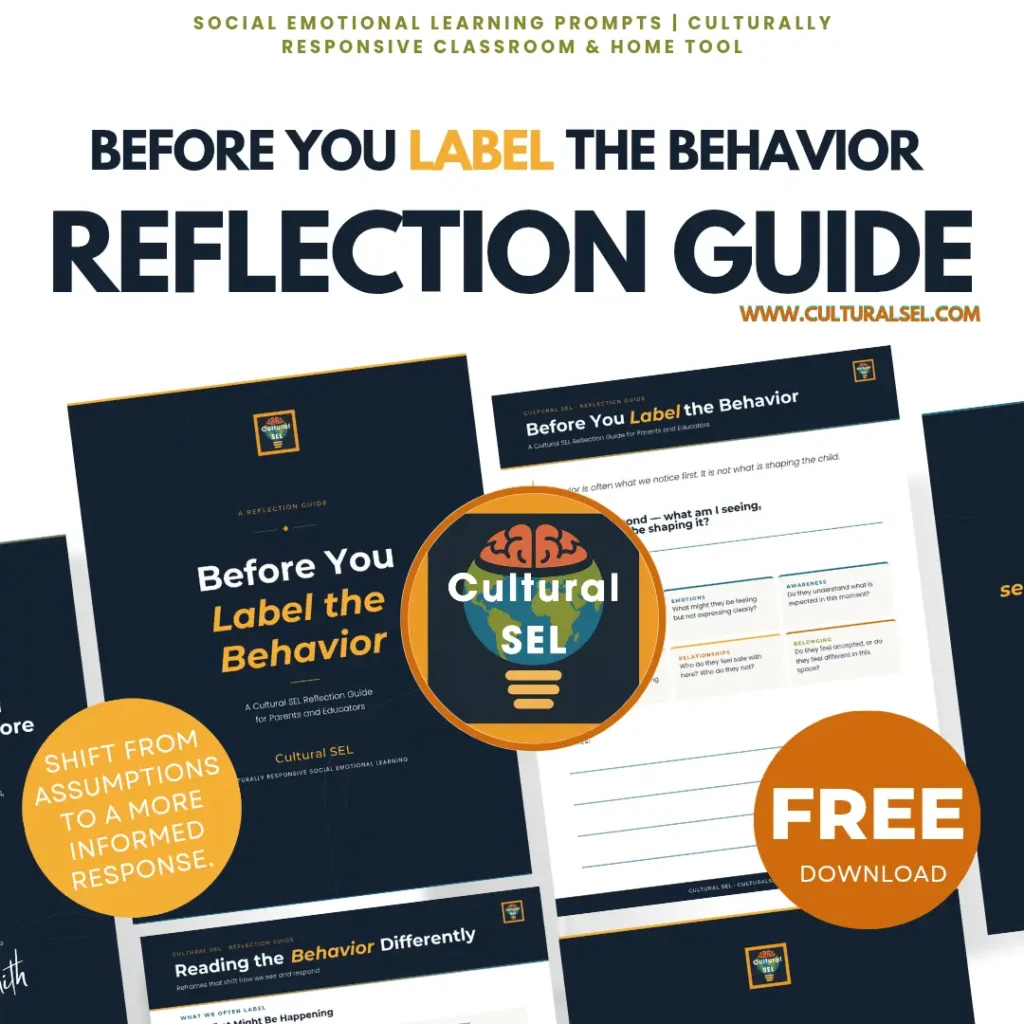
What if the behavior isn’t the whole story?
A free reflection guide that explores what may be influencing a child’s behavior before it is labeled, corrected, or misunderstood.
Quick Answer: How Do Extracurricular Activities Support Social Emotional Learning?
Extracurricular activities support social emotional learning by giving children opportunities to practice emotional regulation, communication, relationships, problem-solving, confidence, identity development, and belonging.
Different activities also expose children to different environments, expectations, and communities that shape how they understand themselves and others.
Why Extracurricular Activities Teach More Than Skills
Children learn by doing. A violin lesson teaches patience because the same phrase must be practiced repeatedly.
A tennis match teaches emotional control when a close point slips away. Team practice teaches cooperation when one child wants the ball, and another has a better position.
A peer-reviewed study of teenagers in community volunteer clubs found that activities outside the school setting built social and emotional competencies that the classroom alone did not reach.
I grew up in a Ghanaian household, where my parents would say in Twi, “Yɛwɔ sukuu nyansa na yɛwɔ fie nyansa.” School wisdom mattered, and home wisdom mattered too.
My parents intentionally exposed us to learning both inside and outside of school. Looking back, I can see that many experiences beyond the classroom were teaching social and emotional skills before I had language for it.
I have personally seen the same pattern in Nigerian, Caribbean, and South Asian families: weekend language schools, faith programs, and cultural groups doing the same work in a different language and a different room.
When I look at a child’s activity schedule now, I’m not only asking what skill is being built. I’m asking what piece of identity is being held in place at the same time.
Children pick up social and emotional skills in class, at home, in community groups, on stages, and on fields.
Activities give them real chances to lose, recover, try something unfamiliar, follow another person’s lead, and build competence with repetition.
The Social and Emotional Skills Children Practice Through Activities
Activities give children repeated chances to use SEL in context.
Emotional Regulation
Activities put frustration in front of children on a regular basis. A missed note, a bad call, stage nerves, or a mistake in front of peers asks a child to settle down and continue.
That kind of control usually grows through practice, not lectures. Children learn to breathe, refocus, and stay with the task.
Relationship Skills
Most activities involve other people. Children have to listen, take turns, communicate clearly, and deal with disagreements without turning every small issue into a conflict.
They also learn how to relate to different adults, coaches, instructors, older youth leaders, and teammates. That range matters.
Self-Awareness and Confidence
Participation shows children what fits them. One child learns they love public performance. Another learns they prefer quiet focus and predictable routines.
Confidence grows when effort connects to progress. Repetition changes “I’m bad at this” into “I know how to work at this.”
Responsible Decision-Making
Activities create small choices with visible consequences. A child who forgets equipment, skips practice, or rushes preparation sees the result quickly.
That link between choice and outcome builds planning, accountability, and time management in a way that children can feel.
How Different Activities Teach Different Social Emotional Skills
The structure of an activity shapes the lesson. Competition, public performance, risk, rules, and group culture all matter.
Sports and Athletics
Sports bring frequent lessons in perseverance, discipline, teamwork, and emotional control. Children have to handle winning, losing, correction, bench time, and shared goals.
Even individual sports require respect, focus, and recovery after disappointment.
Chess and Strategy Games
Chess teaches patience and planning. A child has to slow down, think ahead, and live with the result of a choice.
The feedback is direct. The board shows what worked and what did not.
Music, Art, and Theater
Creative activities ask children to express something personal in front of other people. That can build confidence, but it can also feel exposed.
They learn to accept feedback, trust practice, and let their voice exist in public.
Swimming and Outdoor Activities
Swimming and outdoor programs bring safety, courage, and trust into the lesson. Water, weather, trails, and equipment all require attention.
Children learn that bravery includes following instructions, taking on risk, and trying again after fear shows up.
Language Learning and Cultural Programs
Language classes and cultural programs teach communication and perspective-taking. A child may shift between languages, social rules, and ways of showing respect.
These spaces also teach that belonging can sound and look more than one way.
How Activities Shape Identity and Belonging
Children often ask quiet questions in activity spaces about belonging.
- Do I belong here?
- Can I be myself here?
- Does anyone here understand me?
- Am I good at this?
- Am I allowed to take up space?
When the answer becomes yes, identity starts to settle. A child may begin saying, “I’m an artist,” “I’m a swimmer,” or “I’m someone who can solve hard problems.”
Activities can become communities where friendship and self-understanding grow together.
Shop Our Culturally Responsive SEL Resources
Digital Cultural SEL resources for parents, caregivers, educators, community professionals, and children.
Explore practical tools, guides, reflection resources, and activities focused on social and emotional development, cultural environments, identity, belonging, relationships, lived experiences, and behavior.
How Activities Shape Children’s Ideas About Who Belongs
Children notice who is present and who is absent.
They notice who gets encouraged, who seems comfortable, and who looks like them.
A child entering a room where nobody shares their language, culture, race, disability, family structure, or interests may feel curious, proud, uncertain, or out of place.
The activity itself may remain the same, but the social and emotional experience can feel very different.
Representation helps children understand that opportunities and interests are not reserved for certain groups of people. Not every room needs to look identical to do that work.
How Activities Expose Children to Different Environments and Expectations
Activities often bring children into rooms they would not enter otherwise. They may spend time with different age groups, meet adults with different communication styles, or join peers from other cultural backgrounds.
That exposure can be stretching in a good way. A child learns how to move between settings, maybe formal in one place, relaxed in another, maybe one language at home and another at practice.
Some children become skilled at noticing the expectations of different spaces and adjusting how they communicate, participate, and present themselves.
That ability is often called code-switching or adaptation. It can be tiring at times, but it is also a skill.
Children who move comfortably across different environments are demonstrating social awareness and flexibility, not inconsistency.
Activities can also introduce children to relationships, networks, and experiences that shape what feels possible for them.
A child may visit places they had never considered or develop confidence in environments that once felt unfamiliar.
Those experiences can influence future opportunities and expand a child’s sense of belonging.
The goal is for children to move through different settings with confidence and still know who they are.
When Access to Activities Shapes Children’s Experiences
Access shapes far more than attendance. Money, transportation, geography, disability accommodations, family schedules, and simple knowledge about programs all affect who gets to participate.
Those limits shape relationships, confidence-building experiences, and exposure to new possibilities.
Still, meaningful activities do not have to be expensive. A library club, park football, youth choir, faith group, community garden, or neighborhood art program can matter just as much as a costly private class.
How Family Values Shape the Activities Children Experience
Families rarely choose activities at random. They choose based on what matters to them: sports, faith, language preservation, music, service, outdoor life, entrepreneurship, or cultural connection.
Those choices send messages.
- Saturday language school says our words matter.
- Choir says music belongs in this family.
- Helping at a family shop can teach responsibility, confidence, and how to talk to many kinds of people.
- Activities often reflect family values in a child’s weekly life.
Some families direct children toward a specific set of activities: academics, tutoring, programs that build toward medicine, law, engineering, or business.
For many immigrant and migrant parents, those are the paths that created stability for their family in a new country, often while navigating limited resources, language barriers, and systems that were not built for them.
When a parent hears an interest and puts no money, time, or encouragement behind it, the child reads that as an answer. The interest does not get developed.
I have personally seen this in African, Caribbean, and Asian homes, and I know there are many others where the same thing happens.
The parent is working from a map that protects their family. What I help adults recognize is the cost to the child.
They stop developing what they cared about because they learned it had no place in the family’s plan for them.
How Activities Can Preserve Cultural Identity and Community Connection
Not every activity introduces children to something new. Some activities preserve what already matters.
Weekend language schools, cultural dance groups, faith communities, heritage camps, and intergenerational activities can become places where children see their language, traditions, and family stories reflected back to them.
These experiences can strengthen a sense of belonging and cultural pride. They remind children that who they are and where they come from have a place in their lives today.
What Adults Often Miss About Extracurricular Activities
Adults may focus on trophies, performance, college applications, or keeping children occupied.
Children may have a different experience. They may be finding an affirming group, discovering a strength, or building trust with a steady adult who sees them clearly.
Sometimes, the adult who notices a child’s effort, encourages their interests, or believes in their abilities becomes part of the story too.
Coaches, music teachers, youth leaders, and instructors can become important sources of support and affirmation.
As a parent, I’ve become more aware that activities are rarely just activities. I can watch a child learn confidence after months of practice, stumble through a friendship problem, handle disappointment, and slowly figure out where they fit.
Those moments often matter more than the outcome adults measure. I help adults learn to watch for that, the quiet shift happening underneath the schedule, not just the trophy at the end of it.
Using the Cultural SEL Lens
A Cultural SEL lens asks better questions about an activity.
- What social and emotional experiences is this child having here?
- What opportunities does this open, and what does it limit?
- What relationships are forming?
- Does the child feel a sense of belonging?
- What strengths are they discovering?
- What assumptions are people making about who this activity is “for”?
- How can this experience support growth and cultural identity at the same time?
Frequently Asked Questions About Extracurricular Activities and Social Emotional Learning
Are extracurricular activities part of social emotional learning?
Yes. Activities give children real chances to practice emotional regulation, communication, confidence, relationships, problem-solving, and decision-making.
Which extracurricular activities are best for social-emotional development?
There is no single best activity. The right fit depends on a child’s interests, personality, needs, and access to local options.
Do activities have to be expensive to support social emotional learning?
No. Community sports, libraries, parks, cultural groups, faith communities, volunteer programs, arts programs, and family activities can all support SEL.
How do extracurricular activities influence identity?
Activities help children discover their strengths, build confidence, form relationships, and experience a sense of belonging. Those experiences shape how they see themselves.
Why does access to activities matter?
Access affects the experiences, relationships, and opportunities children can reach. Limited access can reduce chances to build confidence, skills, and connections.
Can extracurricular activities support cultural identity?
Yes. Some activities expose children to new environments and relationships, while others help preserve language, traditions, faith practices, and connections to community. Both kinds of experiences can contribute to identity development and a sense of belonging.
Adult Reflection Questions
Before you sign a child up or decide against something, ask yourself:
- What activities shaped your sense of self as a child?
- Which spaces felt open to you, and which felt closed?
- What messages did you receive about who certain activities were for?
- Which activities do you encourage because they mattered to you?
- Which ones do you avoid because they did not?
- How do your values shape the choices you make for the children in your care?
- What assumptions do you hold about which activities are “for” children like mine?
- How can you widen access without asking a child to suppress or change who they are to participate?
- When a child shows a strong interest in something, do you treat it as a real direction or file it as a hobby until a coach, scout, or recruiter confirms its value?
- How wide is your definition of success, and does it leave room for what this child is actually good at?
- What might this child already know about their own abilities that you have not recognized yet?
Seeing the Full Picture of an Activity
Extracurricular activities shape much more than a visible skill. They shape emotions, relationships, identity, belonging, and a child’s sense of which spaces they can enter with confidence.
When adults look past performance alone, they can see the fuller picture of SEL at work.
Pick one activity in a child’s week and ask a simple question:
What is this child learning here about themselves, relationships, belonging, and the kinds of spaces they believe they can enter and thrive in?
CONTINUE EXPLORING CULTURAL SEL
Explore free Cultural SEL guides, culturally responsive SEL tools, and practical resources for understanding how cultural environments, identity, belonging, relationships, and lived experiences connect with children’s social and emotional development.
📌 Save or share this post with someone who is raising, teaching, or guiding children.

Hi, I’m Faith, the creator of Cultural SEL
I create practical tools and resources that support children’s social and emotional development and help parents, caregivers, educators, and community professionals look beyond behavior labels.
My work focuses on how cultural environments, identity, belonging, relationships, and lived experiences shape what children experience and how adults interpret and respond.
Read more about Faith and Cultural SEL: https://culturalsel.com/about
Join the Cultural SEL community: https://culturalsel.com/fb