Black History Is a Living Story: SEL Books That Carry Identity Forward

THIS POST MAY CONTAIN AFFILIATE LINKS. THIS MEANS WE MAY RECEIVE A COMMISSION FROM QUALIFYING PURCHASES YOU MAKE THROUGH OUR LINKS. KINDLY READ OUR DISCLOSURE NOTICE FOR MORE INFORMATION.
Black history is not only a timeline of events.
It is the continuation of people living, loving, resisting, creating, and raising children across generations.
SEL time can fall flat when the books on the shelf do not reflect students or children at home. Black history can also get boxed into February and then disappear.
That gap shows up fast. Kids disengage. Big feelings stay unnamed. What should feel meaningful turns into compliance.
This post offers a clear way to choose SEL books that support identity and belonging, along with a list you can use right away.
You will also find simple prompts and a no-prep routine that works in classrooms, libraries, counseling groups, or at home.
What if the right book still misses the child in front of you?
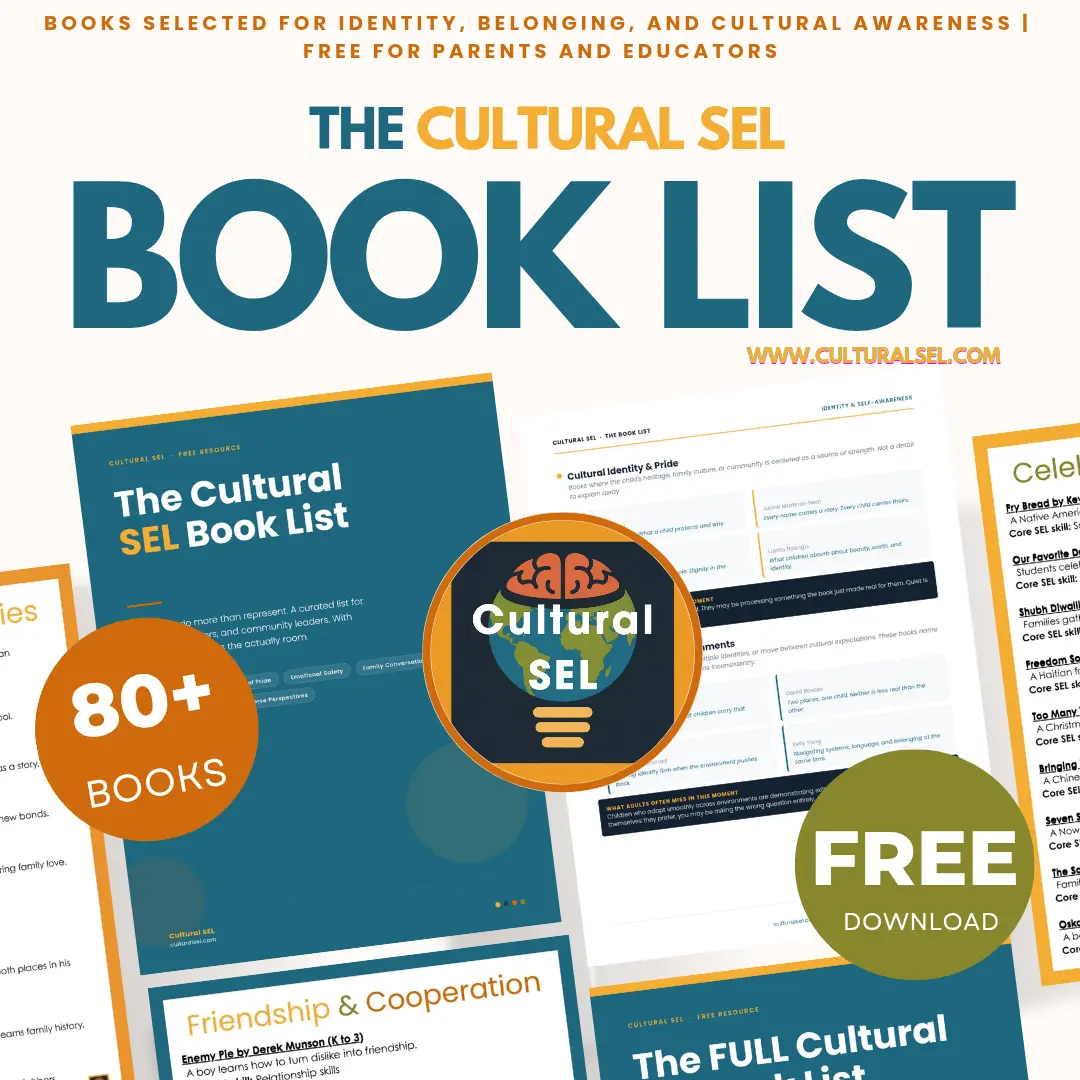
80+ books selected for identity, belonging, and cultural awareness. Each category includes what adults often miss, so you know how to use them, not just which ones to choose.
Why SEL books matter for Black identity, belonging, and emotional safety
Stories shape how children see themselves and how they understand others. When a child sees their hair, family, routines, language, and neighborhood treated with respect, it supports self-awareness and self-worth.
It also gives other kids a clearer window into lived experience, which builds empathy without turning any child into a spokesperson.
Trauma-informed SEL matters here. Some stories touch grief, injustice, anger, or fear.
Children need choices in how they respond. No pressure to share. Permission to pass on participating. Space for many feelings at once, including pride, sadness, frustration, and hope.
Black history includes joy, creativity, humor, friendship, leadership, and everyday life. Books that hold all of this help children feel seen and safe.
Black History Is Not a Timeline. It’s a Living Story
Black history lives through everyday life
When Black history is reduced to dates and moments, something essential gets lost. What disappears is everyday life.
The care. The imagination. The emotional strength. The relationships that carried those moments forward.
If children are going to understand Black history, this is where it should begin.
Why stories matter when we teach Black history
Families and educators often ask how to teach Black history without turning it into a list of struggles or achievements that children cannot connect to or recognize in their own lives.
Stories help answer that question. Stories show how history continues through homes, families, creativity, and voice.
They show how children grow into themselves while carrying what came before them.
This is where social and emotional learning fits naturally. Identity, belonging, and relationships are not separate from Black history. They are how Black history continues.
Why this book list exists
The books in this list were chosen intentionally.
- They do not rush children toward explanations.
- They do not ask children to perform understanding.
- They do not treat Black history as something that happened only in the past.
Instead, they begin with life. They center family routines, imagination, emotions, and relationships as the foundation for understanding history.
That is what allows Black history to feel real, connected, and ongoing.
African American culture did not form in isolation.
It took shape through African roots, Caribbean and other Black diasporic histories, and life on Indigenous land across generations.
While this list centers African American stories, it also reflects shared ways of living, learning, and passing stories and values across generations.
How These Stories Carry Black History Forward
They begin with everyday life
Children see hair being washed, hands being held, meals being shared, and routines unfolding.
These moments matter because Black history did not begin with suffering.
Long before enslavement, segregation, and civil rights struggles, there were people living full lives, with families, communities, cultures, routines, creativity, joy, and imagination.
They move through family and community
Black history has always traveled through relationships. Through grandparents, parents, neighbors, and shared spaces. Through stories told at tables and lessons learned by watching.
They make room for imagination
Dreaming, creating, and imagining have always been part of survival and hope. Imagination allowed people to see beyond what was placed in front of them.
They show voice developing over time
Young children learn who they are.
Older children learn where they belong.
Teens learn how to speak, question, and choose.
These stories follow that growth without forcing it.
They link past, present, and future
Some stories gently touch historical moments. Others stay rooted in the present. All of them point forward.
They help children understand that Black history is not finished. It continues through them.
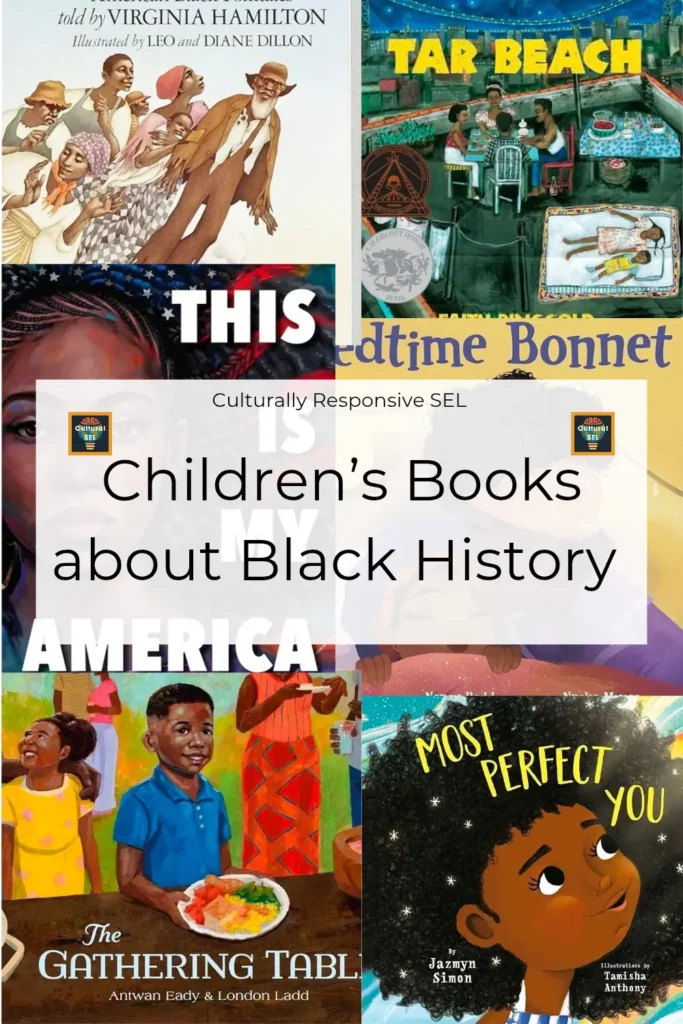
SEL Books That Carry Black History Forward
Babies and Toddlers (Ages 0–3)
Core SEL focus: Feeling safe, seen, and emotionally secure
- Hey, Baby! by Andrea Pippins
Supports bonding and early emotional connection through familiar care. - Cool Cuts by Mechal Renee Roe
Reflects everyday routines that help young children feel comfortable in their bodies and identity. - Happy Hair by Mechal Renee Roe
Encourages pride and positive early self-image. - Grandma’s Purse by Vanessa Brantley-Newton
Shows curiosity, family closeness, and emotional safety.
Early Elementary (Grades K–2)
Core SEL focus: Identity, confidence, and emotional expression
- Most Perfect You by Jazmyn Simon, illustrated by Tamisha Anthony
Encourages self-acceptance and confidence. - I’m Growing Great by Mechal Renee Roe
Reflects how children notice their own growth and emotions. - Nana Akua Goes to School by Tricia Elam Walker, illustrated by April Harrison
Supports belonging while navigating difference. - Bedtime Bonnet by Nancy Redd, illustrated by Nneka Myers
Affirms family care and familiar routines. - Wash Day with Mama by Monica Mikai
Shows patience, connection, and shared time.
Elementary (Grades 3–5)
Core SEL focus: Belonging, empathy, and relationships
- The Gathering Table by Antwan Eady, illustrated by London Ladd
Centers family stories and memory across generations. - Together We Are Sunshine by Jamilah Thompkins-Bigelow, illustrated by Raissa Figueroa
Explores support and togetherness. - Tar Beach by Faith Ringgold
Uses imagination to explore freedom and hope. - The People Could Fly: The Picture Book by Virginia Hamilton, illustrated by Leo and Diane Dillon
Weaves resilience and imagination into historical memory. - Let the Children March by Monica Clark-Robinson, illustrated by Frank MorrisonShows how young people took part in the Birmingham Children’s Crusade, supporting teamwork, courage, and collective voice within a historical moment.
Middle Grade (Grades 6–8)
Core SEL focus: Self-belief, voice, and social awareness
- Black Boy Joy edited by Kwame Mbalia
Shows emotional range, friendship, and joy. - The Stars Beneath Our Feet by David Barclay Moore
Explores grief, creativity, and self-expression. - Hattie Mae Begins Again by Sharon G. Flake
Focuses on resilience and emotional rebuilding. - Clean Getaway by Nic Stone
Encourages reflection on family history and personal understanding. - The Watsons Go to Birmingham—1963 by Christopher Paul Curtis
Connects historical moments with family life and emotional growth.
Teens (Grades 9–12)
Core SEL focus: Identity, ethics, and emotional processing
- Dear Martin by Nic Stone
Explores identity, decision-making, and voice. - Just Mercy (Adapted for Young Adults) by Bryan Stevenson
Encourages empathy and reflection on justice. - This Is My America by Kim Johnson
Focuses on truth, family legacy, and speaking up. - A Bird in the Air Means We Can Still Breathe edited by Mahogany L. Browne
Creates space for emotional expression and reflection.
A simple SEL routine that protects kids’ privacy
- Set norms. Listening matters. Choosing not to share is allowed.
- Read a short section. One scene or page is enough.
- Name feelings. What emotions or body signals showed up?
- Offer a choice. Draw, write briefly, talk with a partner, or reflect quietly.
- Choose one small action for the week.
Explore More Titles
If you are building your shelf beyond this list, we share additional culturally responsive SEL books in our Amazon storefront.
If you prefer another retailer, many of these same titles are also available through Books-A Million.
Use the option that works best for your family classroom, or library.
Frequently Asked Questions About Black History SEL Books
What makes a book support both SEL and Black history?
A book supports both when it reflects Black life with accuracy and care while helping children understand emotions, identity, relationships, or voice. Black history is not only major events. It also includes everyday life, family, creativity, and community across generations.
Are these books only for Black History Month?
No. These books can be used all year. Black history is not limited to February. Identity, belonging, and emotional understanding grow through consistent exposure to meaningful stories.
How do I use these books without turning them into a heavy lesson?
Keep it simple. Read a short section. Name one feeling. Ask one question. Allow children to listen without speaking. The goal is reflection, not performance.
Are baby books really part of SEL?
Yes. For babies and toddlers, SEL begins with safety, connection, and recognition. Books that reflect familiar care, routines, and identity help build secure attachment and early self-awareness.
“The function of freedom is to free someone else.” – Toni Morrison
Black history continues through the stories we share
Black history lives in how children learn who they are, how they relate to others, and how they imagine what comes next.
The stories we choose shape that understanding.
This list exists to honor Black history as something living, ongoing, and deeply human.
If this list helped you rethink how Black history can live through everyday moments, save it for later or choose one book to start with this week.
One story, one conversation, and one shared moment is enough to keep Black history present and meaningful.
CONTINUE EXPLORING CULTURAL SEL
Explore free Cultural SEL guides, culturally responsive SEL tools, and practical resources for understanding how cultural environments, identity, belonging, relationships, and lived experiences connect with children’s social and emotional development.
📌 Save or share this post with someone who is raising, teaching, or guiding children.

Hi, I’m Faith, the creator of Cultural SEL
I create practical tools and resources that support children’s social and emotional development and help parents, caregivers, educators, and community professionals look beyond behavior labels.
My work focuses on how cultural environments, identity, belonging, relationships, and lived experiences shape what children experience and how adults interpret and respond.
Read more about Faith and Cultural SEL: https://culturalsel.com/about
Join the Cultural SEL community: https://culturalsel.com/fb