Children’s Books on Love for SEL (Family, Friends, Community)

THIS POST MAY CONTAIN AFFILIATE LINKS. THIS MEANS WE MAY RECEIVE A COMMISSION FROM QUALIFYING PURCHASES YOU MAKE THROUGH OUR LINKS. KINDLY READ OUR DISCLOSURE NOTICE FOR MORE INFORMATION.
Kids learn what love looks like long before they can define it. In classrooms, libraries, and living rooms, the right read-aloud gives children words for belonging, fixing mistakes after harm, and feeling good about who they are.
This guide shares children’s books about love that support social and emotional learning. These stories leave room for real feelings and real lives.
They include family bonds, chosen family, friendship, shared spaces, and moments where children learn to feel good about who they are.
What if the right book still misses the child in front of you?
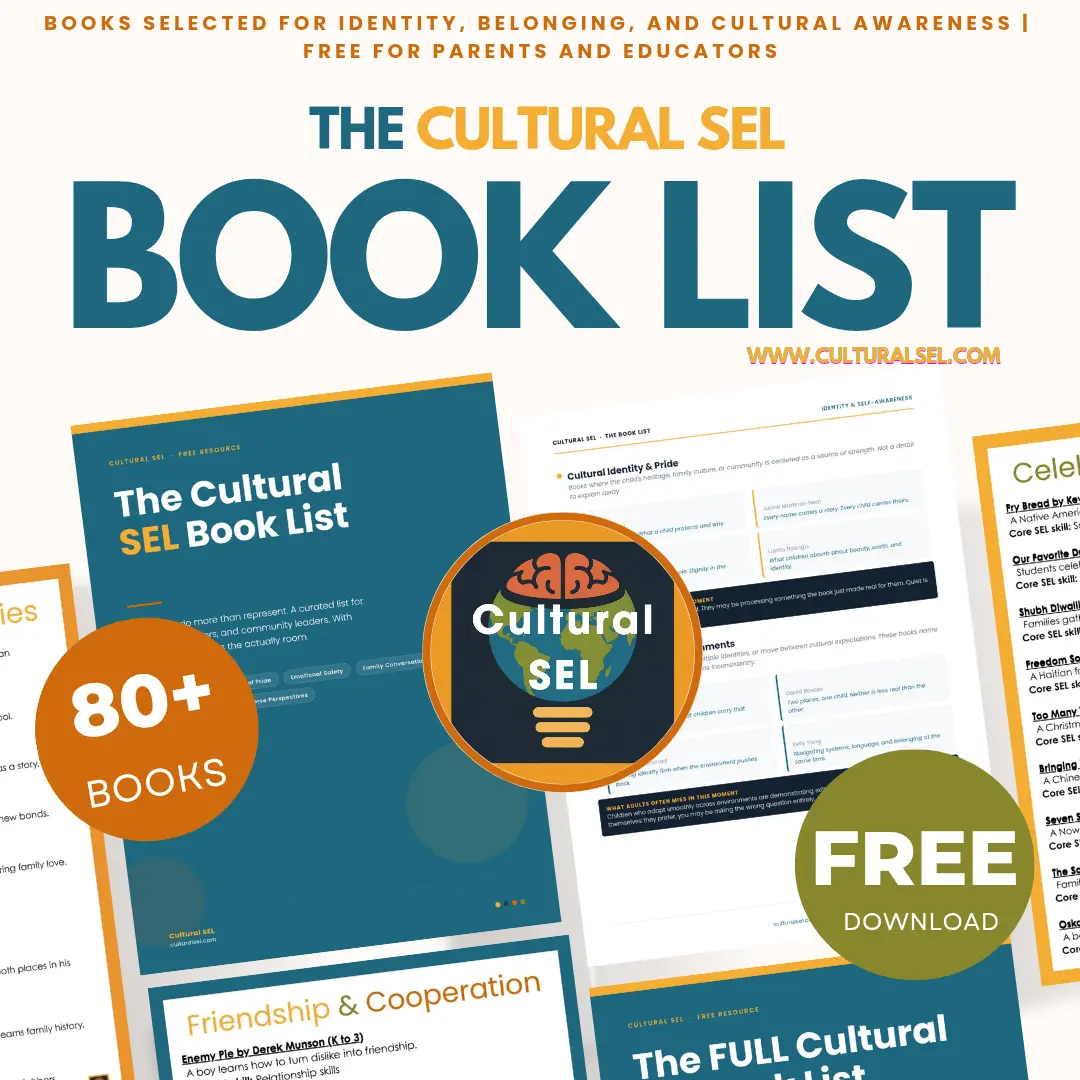
80+ books selected for identity, belonging, and cultural awareness. Each category includes what adults often miss, so you know how to use them, not just which ones to choose.
Family love and safety
These books show how children experience love through reassurance, routines, and connection with caregivers.
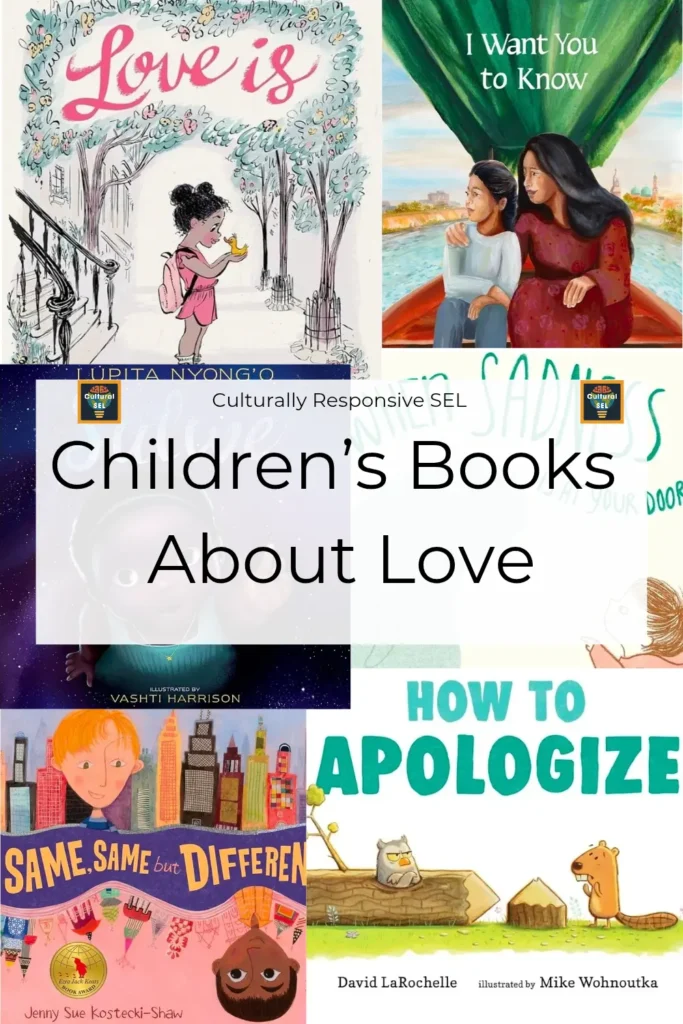
I Want You to Know by Mona Damluji
A caregiver speaks directly to a child, repeating that they are loved, protected, and not alone.
Age: 4–8
SEL focus: feeling safe, reassurance, caregiver connection
For a Girl Becoming by Joy Harjo
Adults speak to a child about growing up, telling her she belongs and that her voice matters.
Age: 5–9
SEL focus: confidence, belonging, identity
My Hair Is a Garden by Cozbi A. Cabrera and Crystal Lynn Webster
A child feels unsure about her hair, then family members talk with her about it and share pride.
Age: 4–8
SEL focus: liking who you are, body confidence, encouragement
My Baba’s Garden by Jordan Scott
A child remembers time spent with a grandparent through shared routines and a garden.
Age: 5–9
SEL focus: naming feelings, remembering loved ones, family connection
Friendship and making things right
These stories focus on peer relationships, mistakes, and what it looks like to fix things.
I’m Sorry You Got Mad by Kyle Lukoff
The story shows the difference between excuses and real apologies by focusing on words and actions.
Age: 5–9
SEL focus: taking responsibility, fixing mistakes, noticing others’ feelings
The Kids in Mrs. Z’s Class by Dan Gutman
School situations show what happens after kids make mistakes and how relationships change.
Age: 6–10
SEL focus: peer relationships, problem solving, empathy
How to Apologize by David LaRochelle
Clear examples show what saying sorry looks like when words and actions match.
Age: 4–8
SEL focus: communication, responsibility, making things right
Community and being welcomed
These books explore belonging, inclusion, and shared spaces.
Rock and Roll by Ruby Amy Thompson
A child is different from classmates and notices how peers react.
Age: 4–7
SEL focus: belonging, confidence, noticing group behavior
Same, Same but Different by Jenny Sue Kostecki-Shaw
Two children build a friendship from far away by sharing everyday parts of their lives.
Age: 4–8
SEL focus: friendship, curiosity, respect
Our Favorite Day by Joowon Oh
Families share small daily moments that bring people together.
Age: 3–7
SEL focus: noticing feelings, connection, shared joy
Love Is by Diane Adams
Love is shown through small, everyday actions as a child moves through shared spaces and interactions.
Age: 4–8
SEL focus: noticing others, helping behaviors, inclusion
Feeling okay being yourself
These stories focus on self-expression and being seen clearly without needing to change.
The Day You Begin by Jacqueline WoodsonA child feels different at school and slowly finds connection through sharing their story.
Age: 5–9
SEL focus: belonging, confidence, peer connection
Sulwe by Lupita Nyong’o
A child notices differences and begins to see her own value.
Age: 4–8
SEL focus: liking who you are, confidence, identity
Red: A Crayon’s Story by Michael Hall
A crayon is mislabeled and struggles until it is recognized for what it truly is.
Age: 4–8
SEL focus: being understood, honesty, identity
Love during fear, change, and hard moments
These books help children notice and name fear, change, and difficult feelings.
The Unlikely Adventures of Ramón and El Cucuy by Donna Barba Higuera
A child faces something scary and talks about it instead of running away.
Age: 6–9
SEL focus: naming fear, bravery, calming big feelings
The Lost Robot by Joe Todd-Stanton
Separation and reunion show what it feels like to be alone and then welcomed back.
Age: 4–8
SEL focus: belonging, trust, bouncing back
When Sadness Is at Your Door by Eva Eland
Sadness appears and stays for a while without being pushed away.
Age: 4–8
SEL focus: recognizing feelings, patience, understanding yourself
How to use love-themed picture books for SEL without forcing a lesson
- Before sharing a book with children, it helps to read it once on your own so you know what happens. Some stories include moments of separation, loss, exclusion, fear, or conflict, and knowing where those moments appear helps you stay present instead of scrambling for words.
- During the read-aloud, keep your language simple and tied to what is happening on the page. Naming an action in one short sentence is often enough. Saying something like “They shared,” “They listened,” or “They fixed a mistake” helps children notice what just happened without turning the moment into a discussion or a lesson.
- When you do ask a question, keep it grounded in the story itself. Asking what the character did with their words or body keeps the focus on actions children can see and understand, rather than asking them to explain feelings or make personal connections.
- Children should always have a choice in how they respond. Some may want to draw, some may point to a picture, and others may try out a short phrase from the story, such as “I’m sorry” or “Can I help?” Listening quietly is also a valid response.
- Ending the read-aloud the same way each time helps signal closure. A simple line like “One thing I noticed was…” allows you to model reflection without putting children on the spot.
Explore More Titles
If you are building your shelf beyond this list, we share additional culturally responsive SEL books in our Amazon storefront.
If you prefer another retailer, many of these same titles are also available through Books-A Million.
Use the option that works best for your family classroom, or library.
FAQ: choosing children’s books about love
What are good children’s books about love for a classroom?
Good choices show clear actions children can point to, such as helping, apologizing, sharing space, or including someone else. Books that reflect different families and everyday life experiences also help more children see themselves in the story.
How do I talk about liking who you are with young kids?
Keep the focus on everyday moments, like taking care of your body, noticing things you’re proud of, asking for help, and figuring out what to do after a mistake.
Are these books okay to use when children have had hard experiences?
Many are. Reading ahead and letting children choose how much they want to respond helps the read-aloud feel steady and respectful.
Build a love book list children recognize
A strong love book list includes family, friends, shared spaces, and stories where children see themselves clearly.
Choosing one book at a time and one simple question is often enough to start meaningful conversations.
If this list was helpful, choose one book to try this week. Read it once on your own, plan one simple line you can say out loud, and notice what children respond to.
CONTINUE EXPLORING CULTURAL SEL
Explore free Cultural SEL guides, culturally responsive SEL tools, and practical resources for understanding how cultural environments, identity, belonging, relationships, and lived experiences connect with children’s social and emotional development.
📌 Save or share this post with someone who is raising, teaching, or guiding children.

Hi, I’m Faith, the creator of Cultural SEL
I create practical tools and resources that support children’s social and emotional development and help parents, caregivers, educators, and community professionals look beyond behavior labels.
My work focuses on how cultural environments, identity, belonging, relationships, and lived experiences shape what children experience and how adults interpret and respond.
Read more about Faith and Cultural SEL: https://culturalsel.com/about
Join the Cultural SEL community: https://culturalsel.com/fb