Culturally Responsive SEL in Inclusive Classrooms: Beyond Stereotypes
THIS POST MAY CONTAIN AFFILIATE LINKS. THIS MEANS WE MAY RECEIVE A COMMISSION FROM QUALIFYING PURCHASES YOU MAKE THROUGH OUR LINKS. KINDLY READ OUR DISCLOSURE NOTICE FOR MORE INFORMATION.
Adults who want to bring culture into SEL usually start in the same place: find a cultural example, add it to the lesson, and call it done.
- A hip-hop activity.
- A taco craft.
- A folktale from a country the class is “studying.”
One example per community, repeated until it feels representative.
Students notice when their culture shows up as a symbol rather than a lived reality.
They notice when a single food item or music genre stands in for a family, a neighborhood, a set of daily practices that look nothing like that symbol.
Culturally responsive SEL builds from what students actually live: their languages, family routines, community practices, and daily experiences. One cultural symbol, however well-chosen, cannot hold all of that.
In this post, you will learn why one-example approaches miss students, and how to bring real cultural diversity into daily SEL practice.
The goal is to build culturally responsive SEL that grows confidence, connection, and identity for every learner.
What if the right book still misses the child in front of you?
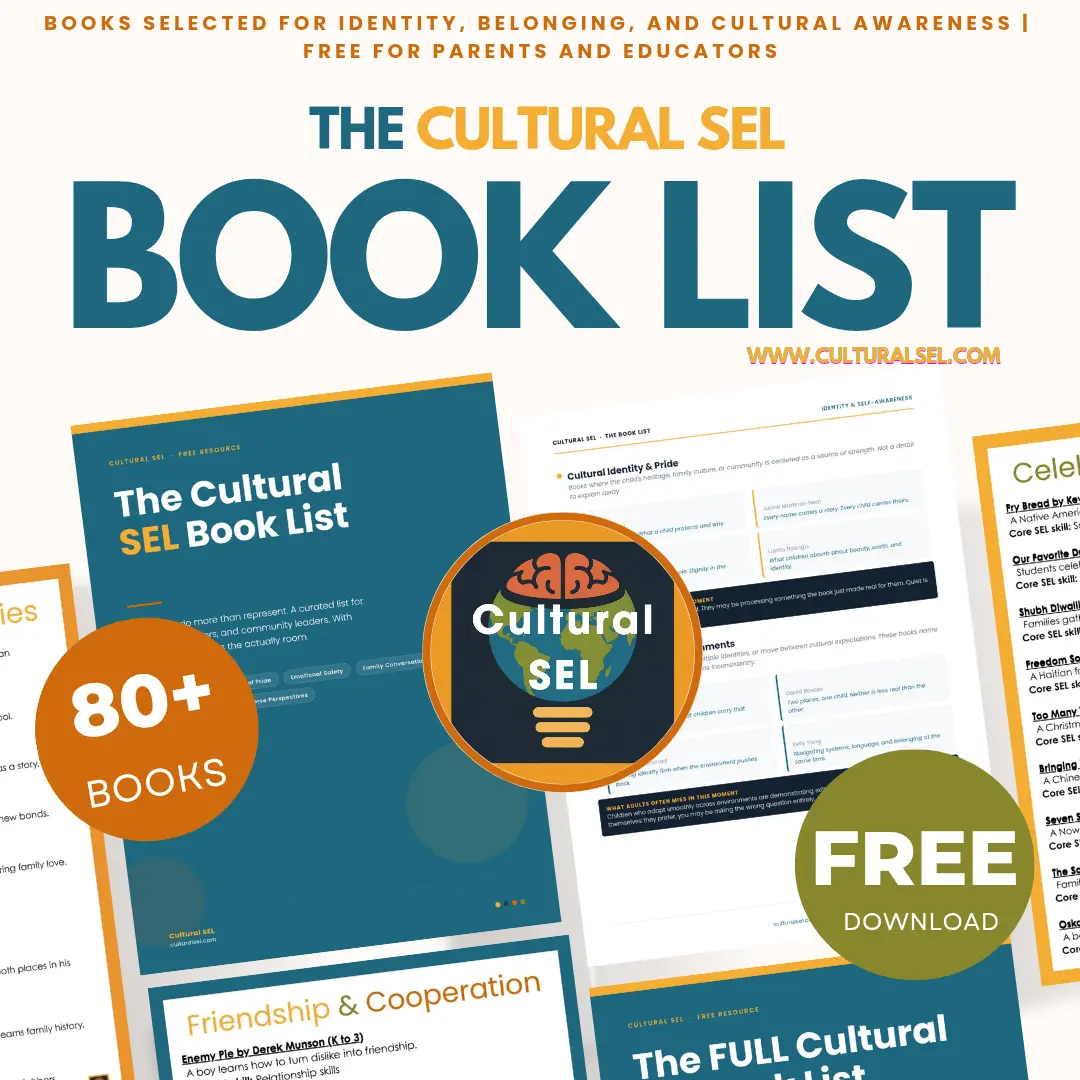
80+ books selected for identity, belonging, and cultural awareness. Each category includes what adults often miss, so you know how to use them, not just which ones to choose.
Why Stereotypes Miss the Mark in Culturally Responsive SEL
When culture gets reduced to a single sound or scene, many students are left out. Some learners prefer quiet reflection or faith-based practices.
Others connect through nature, crafts, or family work. A student whose Ghanaian identity shows up in school as a bracelet or a name that gets mispronounced is experiencing something different from a student whose entire cultural world is reflected in the classroom material.
Growing up Ghanaian in Germany, I learned early what it feels like when your culture is noticed at the surface and never followed any deeper.
I watched the same thing happen with my own children when they started school in the United States.
A Ghana bracelet. The country jersey. Cultural markers that got pointed at rather than understood.
What I recognized in both cases was a pattern that has nothing to do with bad intentions: adults seeing the detail without seeing what it holds.
That is what I help adults recognize now. There is a difference between acknowledging a child’s cultural background and actually understanding what that background contains.
In PTA and family engagement meetings, I have sat across from well-meaning adults who suggested a hip-hop cypher as the one way to “bring in culture” for a classroom.
I have watched the same pattern with food, where a taco craft gets proposed to represent Mexican culture, as if one dish stands in for family traditions, regional differences, and daily routines that vary by household.
What that told me is that culture was being treated as a single checkbox rather than a living set of practices.
It is why I work with adults building SEL spaces to ask which specific community a practice comes from, and to look for more than one entry point into it, before calling a lesson culturally responsive.
If we rely on just one example, students may feel their identity is ignored or boxed into one version, families may not recognize their values in what the school presents, and students participate less or their behavior gets misunderstood.
A broader view of inclusive social emotional learning affirms all identities. Current guidance on culturally responsive SEL shows higher belonging when classrooms respect many ways of speaking, learning, and sharing.
Students build trust when they hear stories, see faces, and use texts that reflect their worlds. They participate more when activities are linked to their home lives. They learn to respect peers because the class models that respect first.
State frameworks on culturally responsive teaching urge schools to embed SEL in classroom routines and to use student data and voices to shape lessons.
CASEL guidance highlights adult cultural competence, identity affirmation, and inclusive curriculum. University research points to storytelling, group problem-solving, and discussion about community issues as core practices that help students feel safe, valued, and ready to learn.
Think small and concrete:
- Use stories from many cultures to teach empathy.
- Invite family routines and practices into reflection prompts.
- Connect SEL goals to community strengths, like mutual aid or intergenerational care.
How to Bring Diverse Cultures into Your SEL Practices
Start with relationships, then design activities that reflect your students. The aim is to invite culture in, not guess at it.
That starts with asking rather than assuming. Short surveys, interest maps, and family conversations tell you what languages students speak at home, what stories they grew up with, what community events shape their weekends, what games or rituals are part of daily life. Those answers are the material. Build from what students actually live.
Build a rotating library of picture books, folktales, and short texts from many communities. Use them in daily SEL prompts, not only during cultural heritage months.
Let students choose how they engage: through conversation, drawing, writing, or audio. Students who process differently or communicate differently at home need more than one way in.
Tie SEL competencies to what students already do outside the classroom: self-management during prayer or a mindfulness practice from home, perspective-taking during elder care, teamwork in community sports or neighborhood service.
These are not hypothetical. They are practices many students already know and do not see reflected in school.
When students bring up issues from their communities, create space to discuss them. Short, guided conversations that connect to empathy, conflict resolution, and values are part of culturally responsive SEL. They are not a detour from it.
To keep cultural examples from sliding into stereotype:
- Let students lead with their own stories.
- Never assign a student to speak for an entire group.
- Offer multiple examples from the same community rather than a single symbol.
- Review materials regularly for tokenism and bias.
- When families offer to share a tradition, keep it low pressure and opt-in.
Students show higher engagement when they see their lives in the work. Trust builds when the classroom reflects more than one way of speaking, learning, and connecting.
SEL skills transfer more readily when students can link them to what they already practice at home.
Practical Ways to Incorporate Varied Cultural Stories
Stories teach empathy, identity, and problem-solving when they come from more than one place.
- Folktales for empathy. Choose tales from Indigenous nations, West African griot traditions, or East and South Asian fables. Pause to ask what the character is feeling, and why.
- Family rituals for connection. Invite students to share a small ritual, like a morning greeting, snack prayer, or weekend routine. Link it to self-management or gratitude.
- Oral history moments. Record or retell a grandparent’s story. Practice active listening and note-taking. Reflect on lessons learned.
- Local heroes for agency. Highlight a community organizer, nurse, librarian, or coach. Discuss the choices they made and the values they showed.
- Language snapshots. Learn and use greetings from students’ home languages during check-ins. Celebrate identity and belonging.
Example prompt: Share a smell, sound, or saying from home that calms you. Connect the share to a calming strategy you can use at school.
Shop Our Culturally Responsive SEL Resources
Digital Cultural SEL resources for parents, caregivers, educators, community professionals, and children.
Explore practical tools, guides, reflection resources, and activities focused on social and emotional development, cultural environments, identity, belonging, relationships, lived experiences, and behavior.
Building Confidence Through Cultural Connections
Confidence grows when students see their culture as a strength. Link SEL skills to what students already do well in their lives.
Ideas for teachers: use name stories to build self-awareness and pride, celebrate bilingual problem-solving as cognitive flexibility, frame family help like caring for siblings as leadership and empathy.
Ideas for parents and community leaders: share a recipe, tool, or game that teaches patience, turn-taking, or focus; host a short circle at home or at the library using feelings cards in multiple languages; pair teens with younger kids for reading or story time and reflect on teamwork and care.
When classrooms reflect more than one cultural entry point, students who have been holding back start to participate.
The child who stayed quiet because no version of their life showed up in the material begins to take risks, share ideas, and engage with the work.
Culturally responsive SEL reaches beyond a single sound or scene. It includes stories, rituals, languages, and daily life.
When classrooms honor many cultures, students feel seen, trust grows, and the skills they practice in SEL begin to transfer into the spaces they actually live in.
Grab the free Culturally Responsive SEL Book List to build a reading rotation that resists stereotypes from the start. Or subscribe for new tools as they release.
Want quick answers first? Check the FAQ below. Thanks for reading, and share how your students light up when their culture shows up.
Frequently Asked Questions about Culturally Responsive SEL
How do I avoid stereotypes in SEL?
Offer many examples from many cultures, let students lead with their stories, and never assign a student to speak for a group. Review materials for bias.
What are examples of culturally relevant SEL activities?
Use folktales from Indigenous, Asian, and African traditions to build empathy and resilience, share family rituals to build relationships, and discuss local heroes to practice decision-making.
How do I start culturally responsive SEL without defaulting to one example?
Begin with listening. Use short surveys, family chats, and student-led choices. Select diverse texts, connect SEL skills to home practices, and reflect often.
Why include community issues in SEL?
Students learn to name feelings, consider others’ views, and make choices that help their community. This builds agency and respect.
CONTINUE EXPLORING CULTURAL SEL
Explore free Cultural SEL guides, culturally responsive SEL tools, and practical resources for understanding how cultural environments, identity, belonging, relationships, and lived experiences connect with children’s social and emotional development.
📌 Save or share this post with someone who is raising, teaching, or guiding children.

Hi, I’m Faith, the creator of Cultural SEL
I create practical tools and resources that support children’s social and emotional development and help parents, caregivers, educators, and community professionals look beyond behavior labels.
My work focuses on how cultural environments, identity, belonging, relationships, and lived experiences shape what children experience and how adults interpret and respond.
Read more about Faith and Cultural SEL: https://culturalsel.com/about
Join the Cultural SEL community: https://culturalsel.com/fb