The Real Reason Adults Wait Too Long to Talk to Kids About Hard Topics
A child asks a hard question. The adult says they want to think it through and explain it properly at another time. Weeks pass. The explanation never happens, or the child gets an answer from somewhere else before it ever does.
This happens with hard topics of every kind: puberty, death, racism, a parent’s own struggles. Many adults genuienly mean to have the real conversation but keep putting it off.
Ask that adult why they waited, and a common answer is: if I tell them now, they might know more than they should at their age.
FREE DOWNLOAD · Conversation Prompts
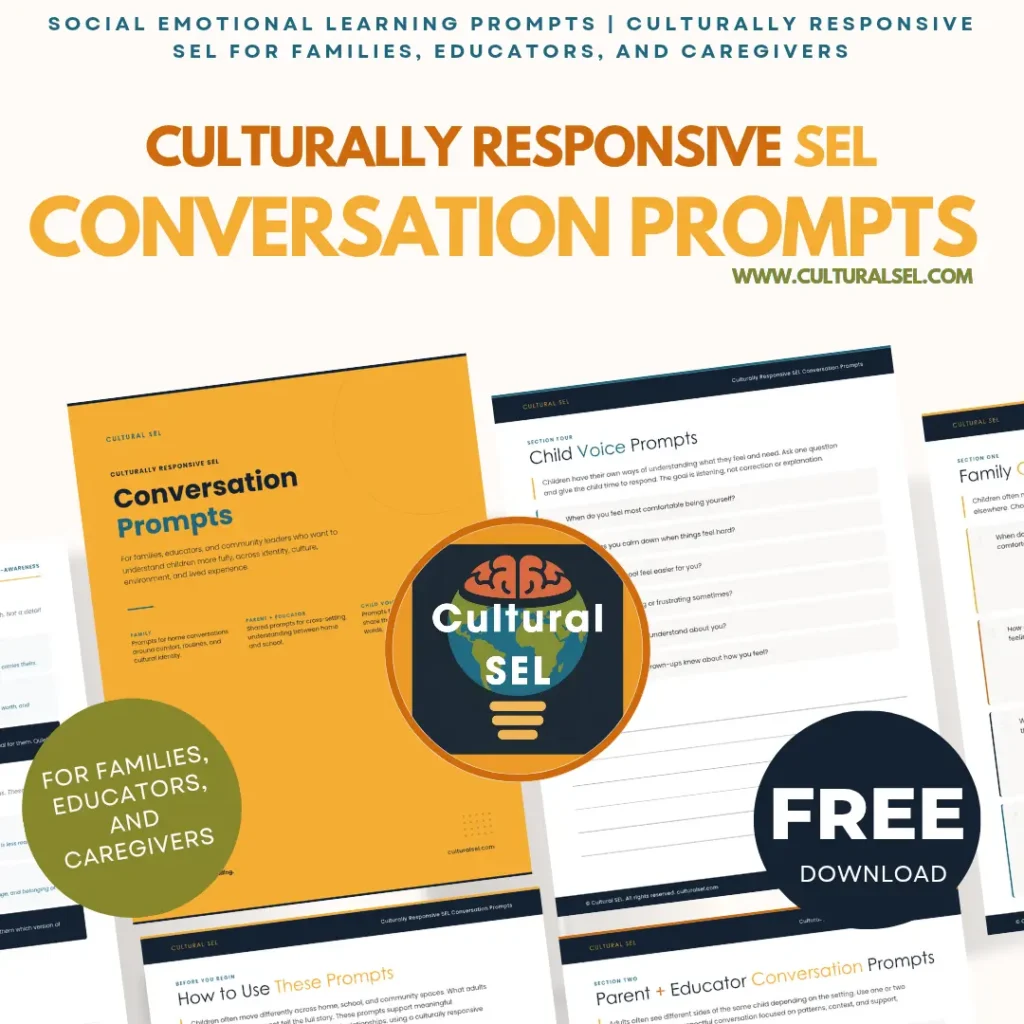
What if one conversation changed how you see the child in front of you?
A free resource that opens conversation across home, school, and community. For adults who want to understand children more fully, across identity, culture, environment, and lived experience.
When Waiting to Talk to a Child Makes Sense and When It Doesn’t
The belief that talking about a hard topic tells a child more than they can handle is half right. A parent whose marriage is struggling, whose money is tight, or who is grieving does not need to explain every detail to a child.
When a parent shares their own worries, the child can end up comforting the parent instead of being comforted.
A child’s own experience is different. Puberty, a death in the family, a comment made about their race, a scary news story: a child lives through these directly, whether or not an adult has said anything about them yet. Treating them like an adult’s private problem is the mistake.
What Happens When a Child Hears It From Someone Else First
My husband and I once told our son we wanted to get our information right before we sat down and talked with him properly about something he’d heard on the school bus.
The next day, he came home and told us, “Don’t worry, I already know now.”
What that showed us: waiting to explain it well didn’t stop him from finding out anyway. Someone else explained it to him before we did, and we had no way to check what he’d actually been told.
Now we don’t wait for the perfect way to say it. We answer what our kids are actually asking. If we don’t know something, we say so, and tell them we’ll come back with more information once we do.
Waiting made us lose the ability to know where the information came from and whether it was right.
A child keeps learning about the world while an adult waits, and the source may be someone the adult would never have picked.
This is exactly what happens with body safety and puberty conversations: kids can get their information from friends, videos, or the internet before a parent feels ready, and by then the parent is correcting what the child has already heard.
How Culture Shapes Which Topics Parents Avoid
Many families wait to talk with their children about racism or bias, wanting to protect the child’s sense of safety for as long as possible.
But other children or adults may already be treating the child unfairly before that conversation ever happens.
The same thing happens with financial hardship in households across every background: parents avoid naming it because saying it out loud feels like admitting failure, even though the children living through it may already sense something is different.
A relative’s mental illness can be handled differently. In some families and communities, it’s described only in religious or spiritual terms, or not discussed at all, because parents worry about being judged by people outside the family.
Mental health looks different across cultures for the same reason: what counts as acceptable to say out loud varies by family and community as well as by topic or a stigma put on it.
Different topics, different reasons, but the same belief underneath each one is often: telling them now means telling them too much.
For each of these, the first move is the same: find out what the child has already noticed. Step 1 below shows how. If you recognize your own family’s “not yet” topic in any of them, step 2 is where to start.
How to Talk to Kids About Hard Topics Without Waiting for the Right Moment
For a child’s own experience, which deserves an honest, age-appropriate answer given early, these steps keep the conversation going:
- Ask what they already know. Use a question that can’t be answered with yes or no, such as what they have heard about it, and let them finish before you explain. The NSPCC recommends the same open-question approach.
- Check what is making you wait. Ask yourself what you assume about this topic, what you learned about it growing up, who the silence was meant to protect, and whether the hesitation comes from what your child needs or from your own upbringing. Cultural SEL calls this adult awareness: the adult’s own lens is part of the situation too.
- Answer what they asked. Give an honest answer to the question in front of you and leave the rest for later conversations.
- Say so when you don’t know. Tell them what you know right now and that you’ll come back with more, then come back. That is what we do at home.
- Keep checking in. UNICEF advises parents, in its guidance on talking with children about conflict and war, to keep checking in as a situation continues and to remind children they can talk to them whenever they like.
Shop Our Culturally Responsive SEL Resources
Digital Cultural SEL resources for parents, caregivers, educators, community professionals, and children.
Explore practical tools, guides, reflection resources, and activities focused on social and emotional development, cultural environments, identity, belonging, relationships, lived experiences, and behavior.
Common Questions About Talking to Kids About Hard Topics
What age should I start talking to my child about hard topics?
There is no single age. Start when your child asks, or when you notice they have heard something, and match your answer to their question.
A 1998 national survey by the Kaiser Family Foundation and Children Now asked parents of children ages 6 to 15 about sensitive subjects.
Most children ages 10 to 12 named their parents as their main source of guidance on topics like sex, violence, and drugs, and teenagers named friends and media more often.
For alcohol and drugs, 63% of parents said most parents wait too long to start. The survey is more than twenty-five years old, so it shows what families reported then.
Will talking about it make my child more curious or more likely to try it?
In that same survey, 89% of parents said children are better prepared when parents talk openly about sensitive subjects from an early age, and 9% said early talks lead children to experiment and get into trouble.
So the worry was a minority view among the parents surveyed. The survey measures what parents believe. It does not measure what happens to children.
What we saw in our own home is simpler: our son found out anyway, from someone we hadn’t chosen.
What if my child brings it up first and I’m caught off guard?
You don’t have to answer on the spot. The NSPCC, a UK children’s charity, says that if there is a better time or place, you can agree on when and where you will talk.
Start by telling your child they can say anything they need to and that you won’t blame them, then listen, and let them say everything they want to say before you give opinions or advice.
Asking before you answer builds the same habit as the Cultural SEL Lens, which helps adults notice what a child is experiencing before they decide what it means.
CONTINUE EXPLORING CULTURAL SEL
Explore free Cultural SEL guides, culturally responsive SEL tools, and practical resources for understanding how cultural environments, identity, belonging, relationships, and lived experiences connect with children’s social and emotional development.
📌 Save or share this post with someone who is raising, teaching, or guiding children.

Hi, I’m Faith, the creator of Cultural SEL
I create practical tools and resources that support children’s social and emotional development and help parents, caregivers, educators, and community professionals look beyond behavior labels.
My work focuses on how cultural environments, identity, belonging, relationships, and lived experiences shape what children experience and how adults interpret and respond.
Read more about Faith and Cultural SEL: https://culturalsel.com/about
Join the Cultural SEL community: https://culturalsel.com/fb