Responsible Decision-Making in Social-Emotional Learning

Responsible decision-making in social-emotional learning refers to a child’s ability to think ahead, consider consequences, and choose actions that are safe, fair, and respectful.
This skill develops over time through daily experiences at school, at home, and in peer relationships.
Children who practice thoughtful decision-making learn to pause before acting, weigh options, and understand how their behavior affects others.
These habits support academic progress, stable friendships, and growing self-confidence.
Social-emotional learning helps children build this thinking process step by step. Families and educators support development by guiding reflection, modeling responsibility, and connecting choices to real-life outcomes.
This competency focuses on evaluating choices rather than managing emotional impulses. Emotional regulation routines belong to self-management.
Responsible decision-making centers on judgment, reasoning, and values.

Do you notice different behaviors from the same child at home and at school?
Children often move differently depending on setting. What is seen in one space does not always reflect the full picture.
This FREE Culturally Responsive SEL Conversation Prompts resource supports social and emotional learning by helping families and educators slow down, notice patterns, and choose questions over assumptions.
Created for families and educators who already value SEL and want conversation tools that respect culture, language, and lived experience.
Responsible Decision-Making Skills Help Children Think Before Acting
Responsible decision-making involves looking at possible outcomes before taking action.
Children begin to ask themselves simple internal questions, such as what may happen next, who may be affected, and whether the timing or setting is appropriate.
For example, a student deciding whether to interrupt during group work may pause and realize that waiting for their turn helps the group complete the task. Repeated reflection strengthens judgment over time.
Clear and consistent guidance from adults helps children understand responsibility as a learning process.
When consequences are explained calmly, children connect behavior to outcomes rather than just reacting to punishment.

Understanding Consequences in School Decision-Making
School routines offer daily opportunities to practice thoughtful choices. Students make decisions related to completing assignments, following classroom expectations, and responding to peers.
Completing homework on time often reduces stress and builds trust with teachers. Ignoring responsibilities may lead to missed learning opportunities or classroom conflict.
When adults explain cause-and-effect relationships clearly, children begin to recognize patterns. This awareness supports stronger responsibility and improved academic engagement.
Peer Influence Shapes Everyday Choices
Friendships can influence decision patterns in both helpful and harmful ways. Social pressure may encourage cooperation or push children toward actions that conflict with their values.
A child may feel encouraged to exclude another student to maintain group acceptance. With guidance, the child can learn to pause, consider fairness, and choose respectful behavior instead.
I observed a situation at school where a child hesitated before joining peers who were teasing another student.
That short pause created space for a different decision. With calm adult support afterward, the child was able to reflect on fairness and understand how small choices can shape group behavior.
Practicing responses through discussion or role-play helps children prepare for real-life situations.
Over time, they become more confident in making independent decisions aligned with personal and family values.
Digital Decisions Require Awareness and Accountability
Online environments create additional decision-making responsibilities. Children must consider how sharing content, reacting quickly, or posting comments can influence relationships and personal safety.
Sending an unkind or inappropriate message in a group chat, for instance, may create lasting tension and outcomes. Pausing before posting allows children to think about tone, privacy, and long-term impact.
Teaching digital responsibility within social-emotional learning helps children transfer thoughtful decision-making habits across school, home, and online settings.
Ethical Thinking Builds Fairness and Social Trust
Responsible decision-making includes recognizing fairness, honesty, and shared responsibility.
Children learn that actions shape trust and social reputation within their learning community.
Returning lost property or admitting a mistake demonstrates integrity. These choices strengthen positive identity development and relationship stability.
Age-appropriate discussions about right and wrong support deeper reasoning. Children begin to understand that responsible behavior contributes to a safer and more cooperative environment.
Family and Cultural Values Influence Decision Patterns
Family traditions and cultural expectations often guide how children interpret responsibility and respect.
Some communities emphasize group harmony, while others prioritize individual initiative. These perspectives shape how children weigh options and respond to authority.
For example, a child raised with strong respect norms toward elders may hesitate before challenging a teacher’s viewpoint in class discussion.
Recognizing these influences helps educators interpret behavior more accurately.
When cultural values are openly discussed, children apply them more consistently in their daily decisions.
Family stories, sayings, and shared experiences provide practical frameworks for evaluating choices across generations.

Practical Ways Adults Can Support Responsible Decision-Making
Adults strengthen decision skills by modeling reflective thinking and providing structured opportunities for practice.
• Talk through everyday choices using simple cause-and-effect explanations
• Encourage children to explain their reasoning before acting
• Connect decisions to real-world outcomes and responsibilities
• Recognize effort when children pause and think before responding
• Reinforce fairness and accountability in group situations
Consistent and intentional guidance helps children develop an internal decision process they can use independently.
Responsible Decision-Making Builds Lifelong Thinking Skills
Responsible decision-making helps children move from reacting to situations to thinking them through.
Over time, repeated practice strengthens judgment, accountability, and awareness of others.
When families and schools guide children using real examples, decision skills become part of daily behavior rather than a single lesson.
This consistent development supports academic progress, social confidence, and ethical growth.
Children who learn to evaluate choices early are better prepared to manage complex responsibilities, relationships, and community expectations as they grow.
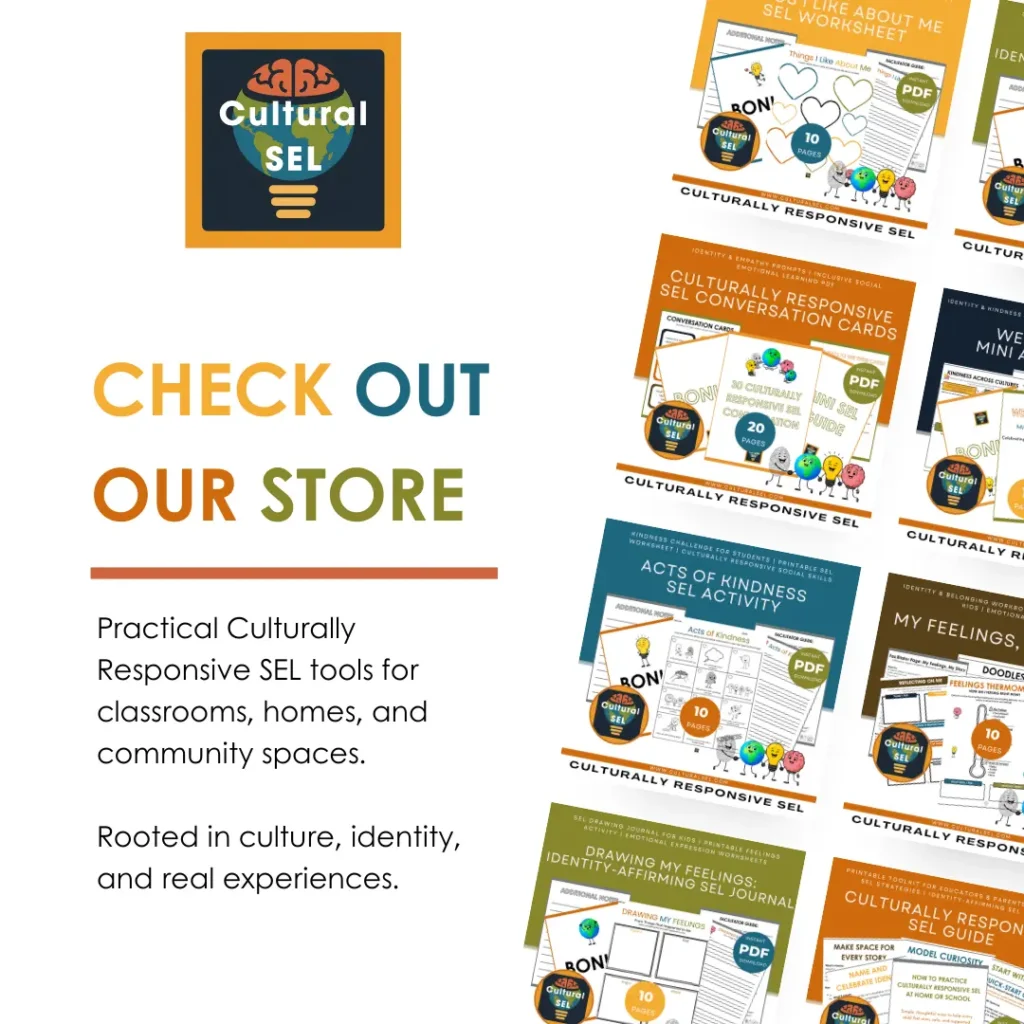
Shop Our Culturally Responsive Social Emotional Learning Resources
Practical tools rooted in cultural awareness and trauma-informed practice.
Designed for educators, families, and facilitators guiding learning and skill development across classrooms, homes, and community spaces.
Frequently Asked Questions
What is responsible decision-making in social-emotional learning
Responsible decision-making is the ability to evaluate actions, consider consequences, and choose behaviors that support safety, fairness, and positive relationships.
Why is responsible decision-making important for students
It supports academic responsibility, improves peer interactions, and helps students develop long-term judgment skills.
How is responsible decision-making different from self-management
Responsible decision-making focuses on evaluating choices and consequences. Self-management focuses on regulating emotions, impulses, and stress responses.
How can families support responsible decision-making at home
Families can discuss daily situations, model ethical behavior, and connect cultural traditions or expectations to real-life decision examples.
How does culture influence children’s decision-making?
Cultural expectations shape how children define respect, fairness, responsibility, and appropriate responses to authority or peer influence.

IF THIS POST RESONATES WITH YOU, EXPLORE MORE OF CULTURAL SEL ON OUR SITE.
You’ll find free guides, practical tools, and reflections to help families, educators, and communities bring culture, identity, and connection into social-emotional learning.
💬 Want to keep the conversation going? Join our Facebook community and connect with others exploring Culturally Responsive SEL.
📌 Save or share this post so other families and educators can bring these ideas into their own homes, classrooms, and communities.
Together, we can keep growing, connecting, and raising empowered learners.

Hello Everyone!
I’m Faith
Founder of Cultural SEL.
I create tools and resources that help families and educators connect identity, legacy, and social emotional learning in simple, practical ways.
My work is shaped by lived experience and intentional growth.
Read more here: https://culturalsel.com/about