Skill vs Style in Social Emotional Learning: Teaching SEL Without Policing Culture
A student talks loudly during a class circle. Another keeps their eyes down when an adult speaks. A third needs a long pause before answering.
Many adults read these as poor SEL. In reality, they may be reacting to a cultural style, not to a missing skill.
Skill vs style in social emotional learning means separating the ability a student has from the way that ability shows up in behavior.
This post explains skill vs style in social-emotional learning using clear language and real classroom examples.
SEL skills stay consistent. The way students show them can change across cultures, families, and personalities.
FREE DOWNLOAD · REFLECTION GUIDE
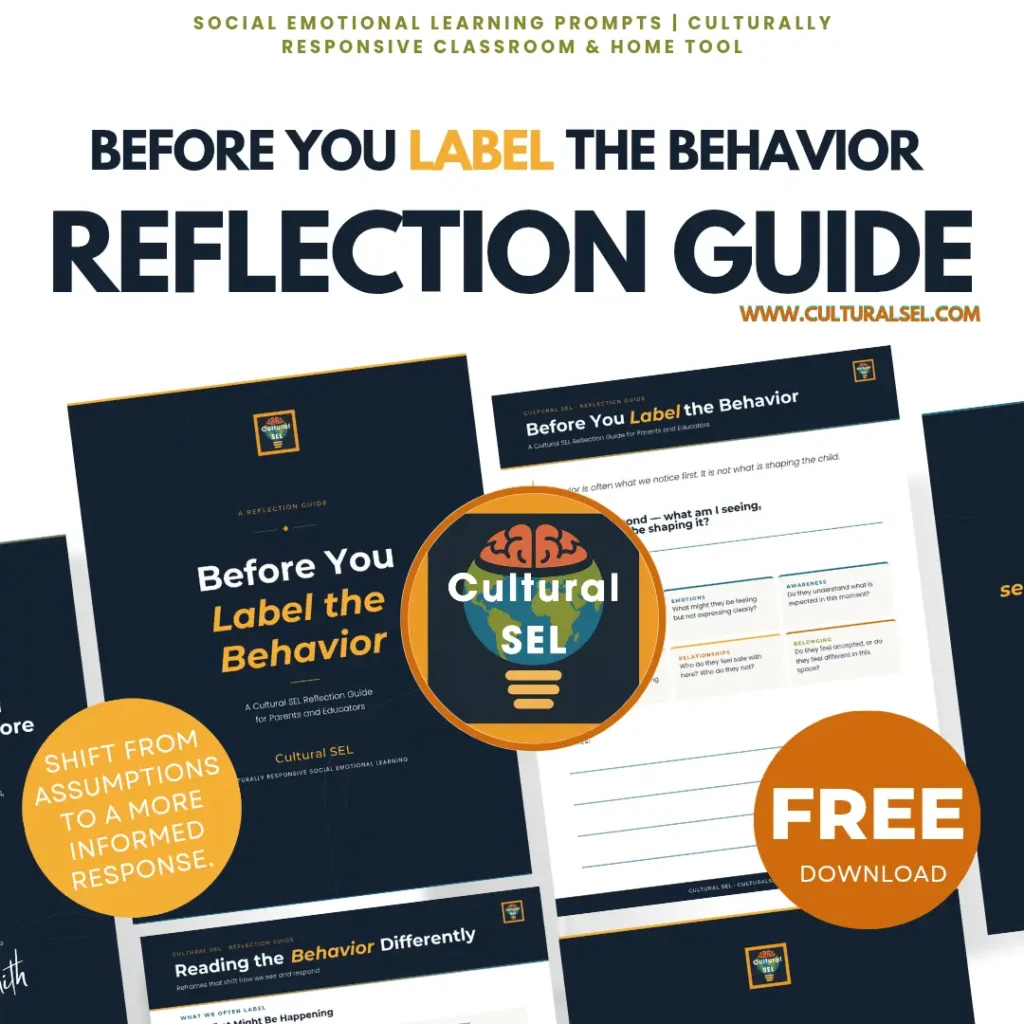
What if the behavior isn’t the whole story?
A free reflection guide that explores what may be influencing a child’s behavior before it is labeled, corrected, or misunderstood.
Social Emotional Learning Skills Are Learnable Abilities
Social emotional learning is a set of learnable abilities. Frameworks such as CASEL describe five core SEL skills: self-awareness, self-management, social awareness, relationship skills, and responsible decision-making.
Recent CASEL updates include a stronger emphasis on identity, equity, bias awareness, and family partnership.
A skill is something you can practice, receive feedback on, and improve over time.SEL skills are visible in everyday situations such as handling mistakes, joining group work, or responding to corrections.
Handling a mistake. Joining a group. Calming down after a conflict.
Because SEL is teachable, adults can plan for it. That means modeling language, practicing routines, and reflecting on real situations. It does not mean grading personality.
Self-Awareness in Social Emotional Learning
Self-awareness means noticing feelings, thoughts, values, and identity.
A student might say, “I get tense when I’m put on the spot.” Another might notice, “I’m quieter in big groups.” Both show awareness.
Identity matters here. Students may name emotions differently at home than at school. That still counts as self-awareness.
Self-Regulation in Social Emotional Learning
Self-regulation, sometimes called self-management, means managing feelings and actions when things get hard.
It includes calming the body, using self-talk, asking for help, and choosing a safe next step.
A student can regulate while moving, doodling, or whisper-reading if it helps them calm down and return to learning.
The question is not “Does this look calm?” The question is “Does this help the student manage and return to learning?”
Relationship Skills in Social Emotional Learning
Relationship skills include listening, taking turns, solving conflicts, and repairing harm by apologizing or taking action to fix the problem.
Students may show respect through different norms around talk, space, and tone.
Shared responsibility matters too. Many students learn cooperation through family roles, sibling care, or community groups, even if they struggle with structured classroom activities.
Responsible Decision-Making in Social Emotional Learning
Responsible decision-making means choosing actions that are safe, kind, and fair.
Children consider how their choices affect themselves and others. Then they choose a next step.
As SEL develops, many schools also teach students to recognize unfair treatment or patterns.
Responsible decision-making includes knowing when to speak up, when to ask for help, and how to raise concerns respectfully and safely.
That still fits under decision-making.
Skill vs Style in Social Emotional Learning Defined Clearly
The cleanest way to separate these ideas is this:
- Skill is a person’s ability.
- Style means how that ability shows up through behavior, tone, body language, and communication choices.
Most SEL confusion starts when adults mix these two. I have caught myself misreading style as lack of skill.
A student may have the skill but show it in a way the adult does not expect.
Here is what that difference looks like:
SEL Focus: Communication
Skill: Share needs clearly
Style: Direct, indirect, formal, casual
SEL Focus: Regulation
Skill: Manage emotions and return to learning
Style: Quiet breathing, movement, mindfulness, journaling
SEL Focus: Respect
Skill: Respond respectfully to others
Style: Eye contact, lowered gaze, silence, honor words
SEL Focus: Repair
Skill: Take responsibility and repair the situation
Style: Direct apology, acts of help, private conversation
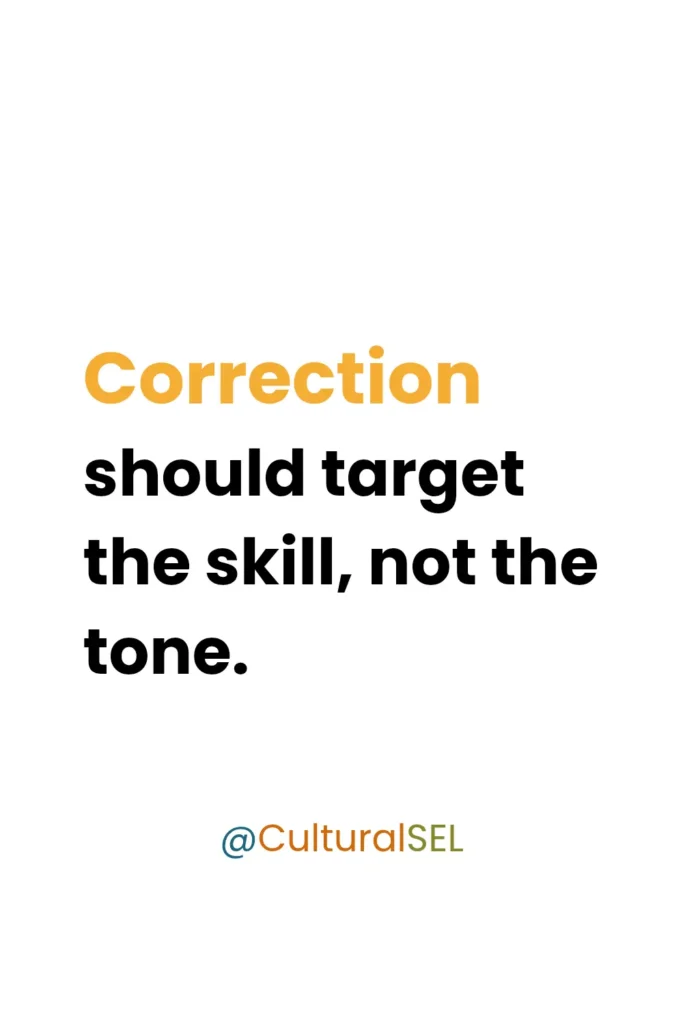
The goal is to build the skill, not require one specific style.
Examples of Skill vs Style in the Classroom
A calm voice can signal control. A strong voice can also signal control. Some students use volume for emphasis, storytelling, or passion while staying respectful.
Quiet processing can mean “I am thinking.” Verbal processing can mean “I think by talking.” Both can reflect self-awareness and decision-making if students learn when each works best.
Repair does not always look the same. Different students fix problems in different ways.
One student apologizes directly. Another replaces what was damaged, offers help, or checks in later. Some children learn repair through action rather than words.
At home, an adult may not say “I’m sorry,” but may show repair by cooking a favorite meal, offering help, or shifting tone the next day.
Both can be real repair if the person who was affected feels heard and agrees that the repair is meaningful.
When adults define good SEL as a single style, students may start masking, meaning they change how they act to avoid correction rather than building the skill.
When Style Gets Mistaken for Lack of Skill
Adults often make fast decisions about behavior. Those decisions shape discipline, referrals, and trust.
Loud does not automatically mean a student has lost control. Some students speak loudly at baseline.
Before labeling it, look for signs of loss of control, such as threats, inability to stop, unsafe choices, or escalating conflict.
Quiet is not automatically disengaged. A quiet student may be tracking closely. Look for note-taking, nodding, a written response later in the day, or a thoughtful one-on-one comment.
Avoiding eye contact is not automatically dishonest. In many families and cultures, a lowered gaze shows respect toward elders or authority figures.
If eye contact is required to prove honesty, students who are taught to lower their gaze as a sign of respect can be unfairly corrected.
Authority grows when students feel accurately seen. That begins when adults ask, “What does respect look like in your home?” and listen carefully.
What Culturally Responsive SEL Looks Like in Practice
Culturally responsive SEL keeps skill targets clear and allows for different styles. It also requires adults to examine their own interpretations.
Start with shared language. Name the skill. Then provide more than one safe way to demonstrate it.
Practical moves:
- Teach multiple regulation options such as breathing, movement, sensory tools, quiet space, or a brief check-in.
- Offer flexible participation such as speaking, writing, drawing, recording audio, or partner-sharing before the whole group.
- Address unsafe or harmful behavior directly. But do not confuse differences in tone, eye contact, or speaking pace with disrespect.
- Use conversations that focus on impact and repair. Focus on who was affected and what repair looks like to them.
- Notice your own triggers. Pay attention to which student styles you label as rude and examine that assumption.
A strong SEL goal sounds like a skill. “Use a regulation strategy before rejoining.” It does not sound like “Use a calm voice.”
Shop Our Culturally Responsive Social Emotional Learning Resources
Practical tools rooted in cultural awareness and trauma-informed practice.
Designed for educators, families, and facilitators guiding learning and skill development across classrooms, homes, and community spaces.
Family Voice and Cultural Expression in SEL
SEL becomes stronger when it connects to a student’s real world. Families already teach emotion skills, respect scripts, and repair routines, even if they use different language.
Bring family voice into the room. The sayings students hear from elders, faith leaders, or community members often guide how they manage emotions and make decisions.
Respect scripts matter. Some students are taught to wait until an adult finishes speaking.
Others are raised with call-and-response patterns. When school expectations ignore those norms, students are labeled quickly.
Communication expectations can differ between home and school. At school, students may be encouraged to explain their feelings right away.
In some homes, children are taught to listen first and speak carefully with adults. When those expectations are not explained, students can be misread.
Teach phrases that work in both settings, such as “I need a minute,” “I disagree respectfully,” or “Can we talk about this properly later?”
How to Check SEL Skills Without Policing Cultural Style
Use this routine during group work, circles, or conflict follow-up.
- Name the skill target. “We are practicing self-regulation during feedback.”
- Define success markers. “Keep your hands and feet to yourself, use respectful words, and return to learning.”
- Offer style options. “You may take notes, ask for a pause, or use a quiet signal.”
- Ask a reflection question. “What helped you handle that?”
- Teach a next step. “Next time, add what you will do to make it right,” not “Be more polite.”
This keeps expectations clear while respecting identity and culture.
Skill vs Style in Social Emotional Learning FAQ
What is the difference between SEL skills and social skills?
Social skills are one part of SEL. SEL also includes identity, emotional awareness, stress management, and decision-making.
Should schools teach a professional communication style?
Schools can teach context-based communication choices, as long as it is framed as access to options, not as the only acceptable way to speak.
How can SEL be assessed without bias?
Assess the skill evidence, not the style. Look for “used a strategy and returned to learning,” rather than “looked calm” or “spoke softly.”
What if a cultural style causes harm?
Address harm clearly. Teach repair. Culture explains style but does not excuse unsafe behavior.
Which SEL skills connect most with culturally responsive teaching?
Self-awareness and social awareness often lead because identity and empathy influence all other skills.
Skill vs Style in Social Emotional Learning Changes How We See Students
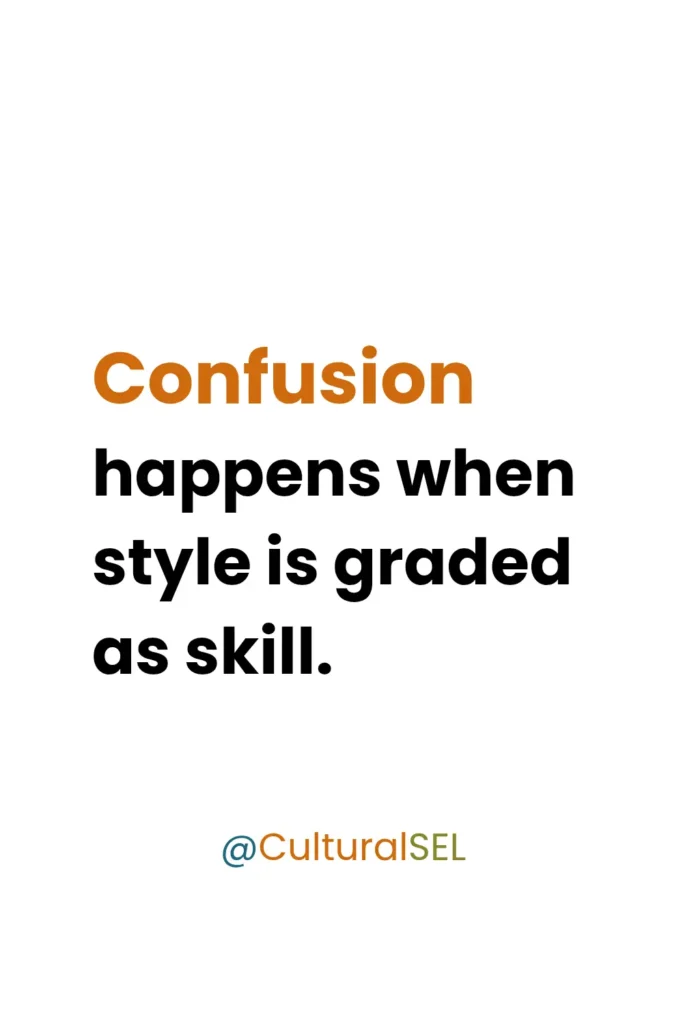
When adults confuse style with skill, students pay the price. They are corrected for style instead of being supported in the skill they are learning.
Separating these two changes discipline, feedback, and trust. It shapes who feels understood in the room.
The next time a behavior feels off, pause. Ask which skill is actually missing. Then teach that skill in more than one way.
That is how culturally responsive SEL becomes consistent, fair, and practical.
CONTINUE EXPLORING CULTURAL SEL
Explore free guides, practical tools, and resources designed to help adults understand how culture shapes children’s social and emotional experiences.
📌 Save or share this post with someone who is raising, teaching, or guiding children.

Hi, I’m Faith, the creator behind Cultural SEL.
I create tools and resources that help adults understand how cultural environments, identity, relationships, and lived experience shape children’s social and emotional experiences and influence how they are interpreted and supported.
Read more here: https://culturalsel.com/about
Join our community: https://culturalsel.com/fb