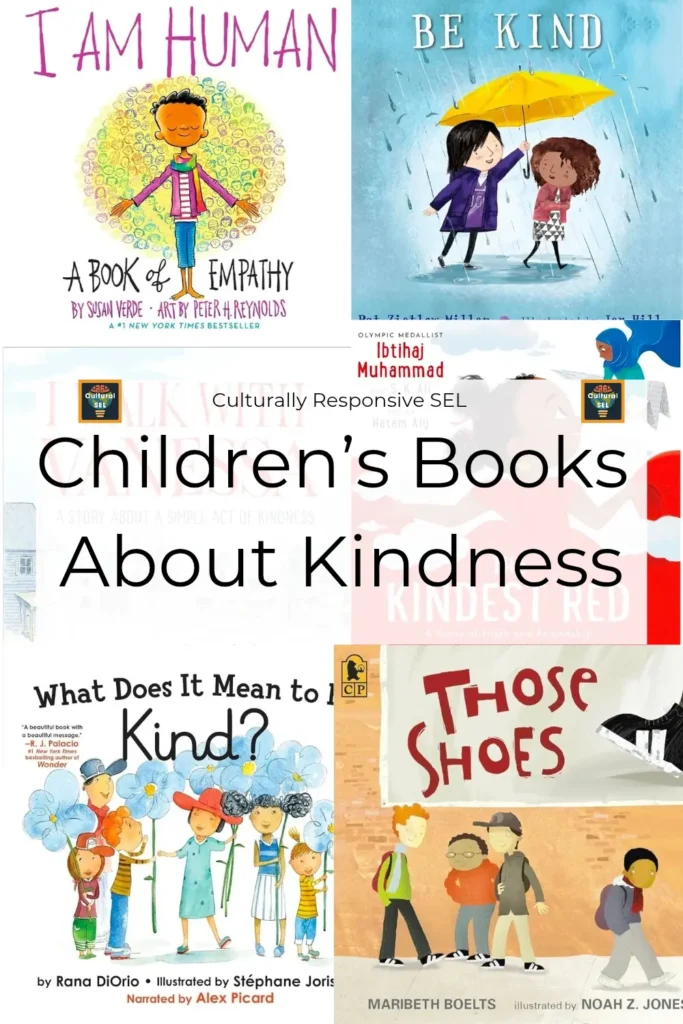
Children’s Books About Kindness for Culturally Responsive SEL

THIS POST MAY CONTAIN AFFILIATE LINKS. THIS MEANS WE MAY RECEIVE A COMMISSION FROM QUALIFYING PURCHASES YOU MAKE THROUGH OUR LINKS. KINDLY READ OUR DISCLOSURE NOTICE FOR MORE INFORMATION.
Some kindness books are hard to use in SEL settings. They may show culture only through visible details like food, clothing, or celebrations, without showing how children think, feel, or make choices.
Others include teasing or exclusion without showing how characters respond, seek help, or repair the harm caused.
In group settings, this can shift the focus from learning to managing reactions.
The books in this guide were chosen because they show kindness through context, emotional language, and clear actions children can notice and practice.
Below is a short set of children’s books about kindness that work for culturally responsive SEL, plus quick prompts and a simple routine you can use in 5 to 10 minutes.
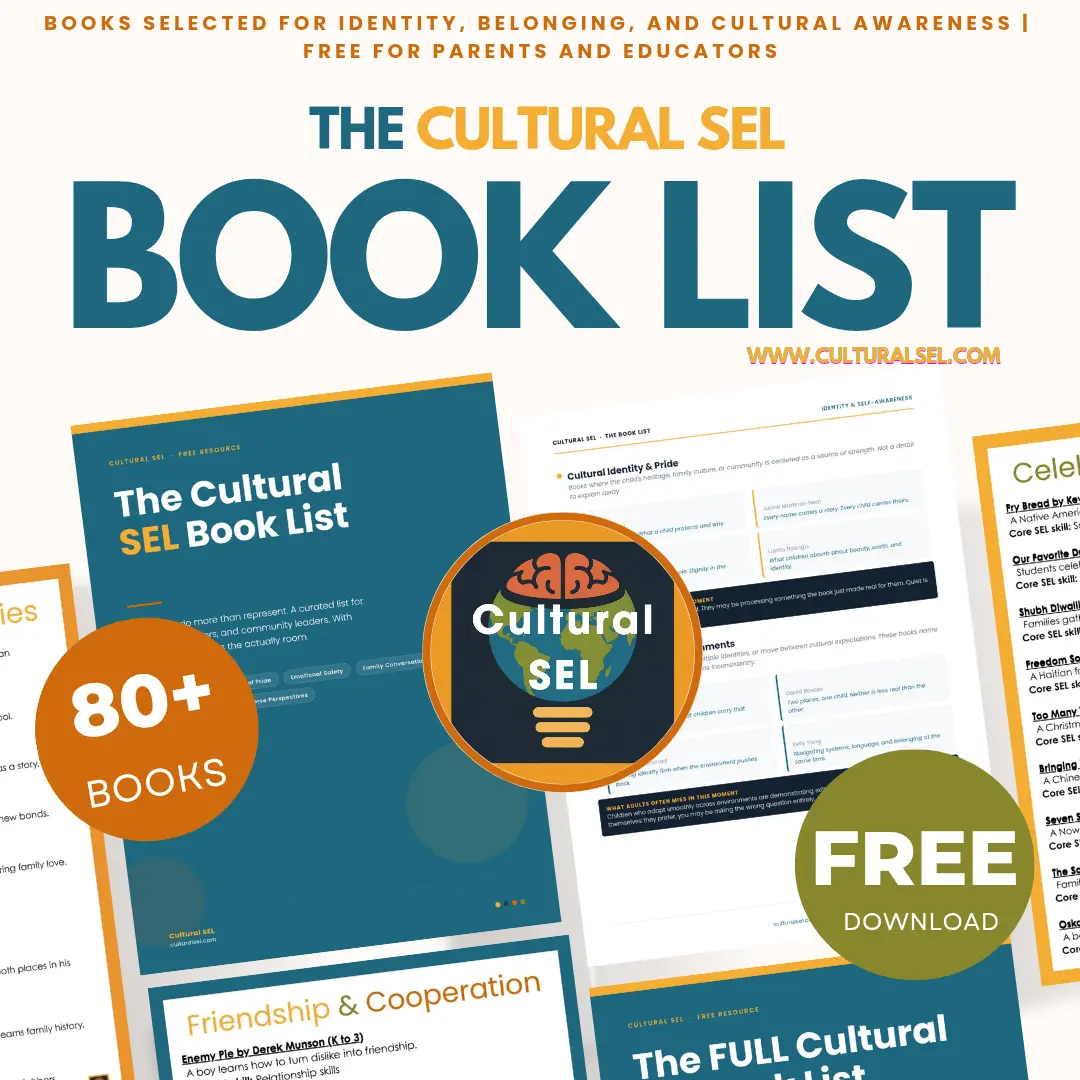
What if the right book still misses the child in front of you?
80+ books selected for identity, belonging, and cultural awareness. Each category includes what adults often miss, so you know how to use them, not just which ones to choose.
What to look for in children’s books that teach kindness through culturally responsive SEL
Culturally responsive SEL means teaching social and emotional skills while respecting children’s identities, home languages, and community values.
When you browse, look for “mirrors and windows,” books that reflect a child’s life and books that help them learn about others.
Strong kindness stories show context, including fairness, belonging, and how children repair hurt caused by words or actions, not just reminders to “be nice.”
Emotions should be named clearly, and characters should have choices.
Trauma-aware note: Trauma-aware note: offer opt-outs by allowing children to listen, draw, or pass without sharing. If a plot includes teasing or bullying, preview it first. If a child goes quiet, reduce demands and offer a nonverbal option rather than prompting discussion.
Quick selection checklist you can screenshot
- Do kids see themselves (names, hair, clothes, family life) without stereotypes?
- Do characters solve conflict by listening and making amends?
- Are feelings labeled, with more than “mad” or “sad”?
- Does the story show fairness and inclusion in the group?
- Is home culture treated with respect, not as a prop?
- Can kids answer prompts without sharing private stories?
- Check author and illustrator background, plus reviews by diverse educators.
A short, high-impact book list for teaching kindness across cultures
| Book | Ages | One-line focus | SEL skill |
|---|---|---|---|
| The Kindest Red (Ibtihaj Muhammad) | 4-8 | Pride, sisterhood, and responding to teasing | Belonging |
| Be Kind (Pat Zietlow Miller) | 4-8 | Small choices that help others feel seen | Responsible decisions |
| I Walk with Vanessa (Kerascoët) | 4-8 | Wordless upstander story after bullying | Upstander action |
| I Am Human (Susan Verde) | 4-8 | Big feelings, mistakes, and self-respect | Self-awareness |
| Here We Are (Oliver Jeffers) | 3-7 | Caring for people and the world we share | Relationship skills |
| What Does It Mean to Be Kind? (Rana DiOrio) | 4-8 | Clear examples of kindness in daily life | Empathy |
| Those Shoes | 5–9 | Wanting to belong while learning empathy and fairness | Empathy, perspective-taking |
Book-by-book: the kindness skill to highlight during read-aloud
- The Kindest Red. Try this prompt: “What could you say to show respect?”
- Be Kind. Try this prompt: “What’s one kind choice you noticed?”
- I Walk with Vanessa. Try this prompt: “What could a helper do next?”
- I Am Human. Try this prompt: “What helps someone calm down?”
- Here We Are. Try this prompt: “How can we take care of each other?”
- What Does It Mean to Be Kind? Try this prompt: “What does kindness look like here?”
How to use these books in real life, without awkward lectures
- Before (1 minute): Name the focus. “Today we’re noticing helpful choices.” Give choices for joining in (talk, point, draw).
- During (3 to 5 minutes): Pause once or twice for a low-pressure prompt. Use thumbs signals or sticky notes for nonverbal answers.
- After (2 to 4 minutes): Do one quick practice. If harm happened in real life, use a repair script: “I did ___. That may have made you feel ___. Next time I will ___.”
Simple questions kids can answer safely
- What feeling do you notice in the picture?
- What might their body feel like right now?
- What might they be needing?
- Who else is affected by this choice?
- What’s one helpful thing someone could do?
- What words could make things safer?
Explore More Titles
If you are building your shelf beyond this list, we share additional culturally responsive SEL books in our Amazon storefront.
If you prefer another retailer, many of these same titles are also available through Books-A Million.
Use the option that works best for your family classroom, or library.
FAQ: choosing and using kindness books for culturally responsive SEL
What age range works best for using kindness books in SEL?
Most picture books work well for ages 3–8. Adjust prompts based on development, using nonverbal responses for younger children and discussion of choices or repair for older ones.
How do I avoid tokenism?
Choose books where culture is part of everyday life, not a one-time feature. Look for characters with relationships, routines, and inner thoughts. If a detail could be removed without changing the story, it may be decorative rather than meaningful.
What if a family disagrees with a book?
Share the learning goal first, such as noticing kindness, fairness, or repair. Invite questions and listen. If needed, offer an alternate title that supports the same skill without debate.
How do I handle stories that include teasing or bullying?
Preview the book ahead of time. Plan where to pause and what language to use. During reading, focus attention on helpers, choices, and repair rather than the harm itself. Allow children to listen without sharing if they choose.
“When I was a boy and I would see scary things in the news, my mother would say to me, ‘Look for the helpers. You will always find people who are helping.’” – Fred Rogers
This guide gives you a clear way to choose kindness books for culturally responsive SEL, along with a short list and a simple read-aloud routine.
Choose one title and one prompt to try this week. Save or share the list when you need something reliable and easy to use.
CONTINUE EXPLORING CULTURAL SEL
Explore free Cultural SEL guides, culturally responsive SEL tools, and practical resources for understanding how cultural environments, identity, belonging, relationships, and lived experiences connect with children’s social and emotional development.
📌 Save or share this post with someone who is raising, teaching, or guiding children.

Hi, I’m Faith, the creator of Cultural SEL
I create practical tools and resources that support children’s social and emotional development and help parents, caregivers, educators, and community professionals look beyond behavior labels.
My work focuses on how cultural environments, identity, belonging, relationships, and lived experiences shape what children experience and how adults interpret and respond.
Read more about Faith and Cultural SEL: https://culturalsel.com/about
Join the Cultural SEL community: https://culturalsel.com/fb