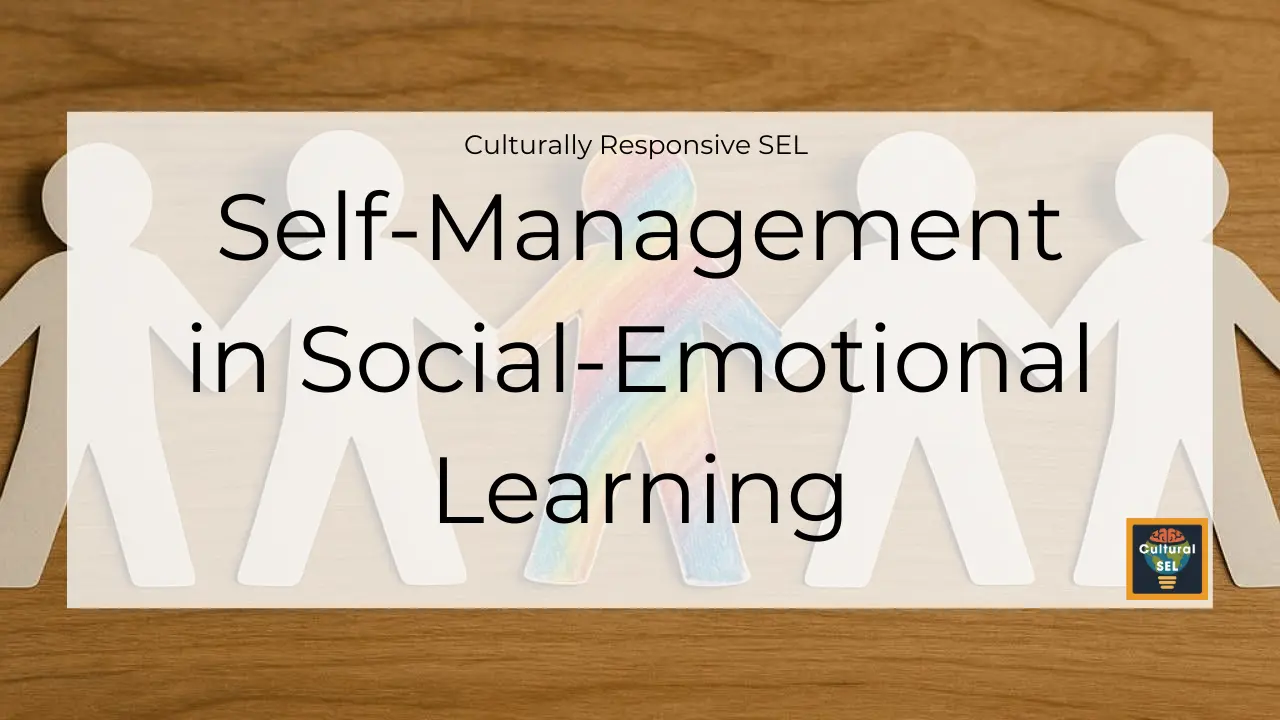
Self-Management in Social-Emotional Learning: How Children Regulate Emotions and Behavior
In classrooms and homes, children are expected to manage frustration, stay focused during tasks, and adjust their behavior in group settings.
These everyday situations, such as transitions, group tasks, and moments of frustration, shape how children learn to handle pressure, follow routines, and keep working when situations feel difficult.
Understanding how self-management develops helps families and educators respond with clearer support rather than assuming children should already know how to regulate themselves.

What if the right book still misses the child in front of you?
80+ books selected for identity, belonging, and cultural awareness. Each category includes what adults often miss, so you know how to use them, not just which ones to choose.
Definition of self-management in social-emotional learning
Self-management in social-emotional learning refers to a child’s ability to handle feelings, control impulses, stay focused, and work toward goals.
In everyday school life, children are expected to manage frustration, wait their turn, follow routines, and continue working even when tasks feel difficult.
These behaviors develop gradually through practice, guidance, and supportive environments.
When children build self-management skills, they are better able to participate in learning, maintain friendships, and handle challenges with greater confidence.
Emotional regulation supports focus and learning
Emotional regulation means recognizing strong feelings and responding in ways that allow learning and participation to continue.
Children often experience emotions such as disappointment, excitement, worry, or anger during the school day. Without regulation skills, these feelings can interrupt concentration or lead to conflict.
Strategies help children regain balance. Deep breathing, quiet pause moments, movement breaks, or guided reflection can help reset attention.
For example, a child who feels overwhelmed during a math task may step away briefly before returning with renewed focus.
In family engagement meetings and classroom observations, I often notice that children who are given simple pause routines regain focus more quickly than those who are pushed to continue immediately.
When adults normalize brief emotional resets, participation usually improves.
Consistent practice helps children understand that emotions are manageable experiences rather than barriers to participation.
Impulse control in classroom routines and participation
Impulse control involves pausing before acting. This includes waiting to speak, following instructions, and managing reactions when situations feel unfair or frustrating.
In structured classroom settings, impulse control supports group learning. A student who learns to wait their turn during discussions contributes more effectively to collaborative tasks.
Teachers and families often support impulse control by modeling calm responses and reinforcing predictable routines.
Visual schedules, clear expectations, and consistent reminders help children anticipate what comes next.
These supports gradually build independence in managing behavior.
Goal setting and persistence build learning stamina
Self-management includes the ability to work toward goals and remain engaged when tasks require effort.
Children develop persistence when they learn to break tasks into manageable steps and recognize progress along the way.
Completing a reading assignment, practicing handwriting, or finishing a group project all require sustained effort.
Adult encouragement plays an important role. When families and educators highlight effort rather than only outcomes, children begin to associate persistence with growth.
This mindset supports long-term academic confidence.
Stress management supports daily school adjustment
School environments include transitions, social expectations, and academic demands that can create stress.
Structured routines reduce uncertainty and support regulation. Morning preparation habits, transition signals between subjects, and quiet reflection moments help children stay emotionally steady.
For example, a student who struggles during noisy transitions may respond well to advance notice and a clear next step.
These small adjustments strengthen the child’s ability to remain regulated throughout the day.
Stress management skills learned in school often transfer to home routines and extracurricular activities.
Cultural expectations shape self-control and discipline
Family and cultural values influence how children understand discipline, responsibility, and emotional expression.
In some households, children are encouraged to show restraint and composure in public settings. In others, open emotional expression is seen as a healthy form of communication.
These perspectives shape how children approach self-management in school environments.
For example, a child raised in a context that emphasizes quiet respect may regulate behavior by observing carefully before participating. Another child may regulate by verbalizing feelings or seeking reassurance.
Recognizing these differences helps educators and families support regulation skills without misinterpreting behavior.
When cultural expectations are acknowledged, children are more likely to develop consistent self-management strategies.
Frequently asked questions about self-management in social-emotional learning
What is self-management in simple terms?
Self-management is the ability to handle emotions, control actions, and stay focused on tasks. It helps children function effectively in school routines and social situations.
Why is self-management important for academic success?
Children who regulate emotions and impulses are better able to concentrate, follow instructions, and complete assignments. These skills support consistent learning progress.
At what age do children begin developing self-management skills?
Early forms of regulation begin in the preschool years, but skills continue to develop throughout childhood and adolescence as expectations and environments change.
How can families support self-management at home?
Families can help by creating predictable routines, modeling calm responses, encouraging problem-solving, and discussing feelings in everyday situations.
How do cultural values influence self-management development?
Cultural beliefs shape expectations around discipline, emotional expression, and responsibility. Understanding these influences helps adults guide children in ways that respect identity while supporting skill growth.
How children manage emotions and behavior often reflects the expectations they see around them. Self-management grows through daily interactions long before it becomes a formal school skill.
Self-management skills develop through daily routines, guidance, and supportive relationships.
When children learn to regulate emotions, control impulses, and persist in their efforts, they become more confident learners.
Schools and families both contribute to shaping these habits. Understanding cultural expectations around discipline and emotional expression allows adults to support regulation in ways that feel respectful, practical, and effective.
CONTINUE EXPLORING CULTURAL SEL
Explore free Cultural SEL guides, culturally responsive SEL tools, and practical resources for understanding how cultural environments, identity, belonging, relationships, and lived experiences connect with children’s social and emotional development.
📌 Save or share this post with someone who is raising, teaching, or guiding children.

Hi, I’m Faith, the creator of Cultural SEL
I create practical tools and resources that support children’s social and emotional development and help parents, caregivers, educators, and community professionals look beyond behavior labels.
My work focuses on how cultural environments, identity, belonging, relationships, and lived experiences shape what children experience and how adults interpret and respond.
Read more about Faith and Cultural SEL: https://culturalsel.com/about
Join the Cultural SEL community: https://culturalsel.com/fb