Empowering Multicultural Children for Success Through Social Emotional Learning
THIS POST MAY CONTAIN AFFILIATE LINKS. THIS MEANS WE MAY RECEIVE A COMMISSION FROM QUALIFYING PURCHASES YOU MAKE THROUGH OUR LINKS. KINDLY READ OUR DISCLOSURE NOTICE FOR MORE INFORMATION.
Every child deserves to feel seen, understood, and supported. But for children growing up in multicultural families, the journey of social emotional learning can look very different.
Their daily lives often involve navigating multiple cultures, languages, and expectations, sometimes within the same day.
I’m not writing this as an educator. I’m a mom, an active member of our school’s PTA, and a committee lead for family engagement and DEI initiatives.
As a multicultural woman raising multicultural children, I’ve seen up close how schools are becoming more diverse, yet intercultural connection is not always given.
What I share here comes from lived experience and the work I’ve done alongside families and schools.
My goal is simple: to be a voice rooted in lived experience, leadership in family engagement, and connection on a human level.
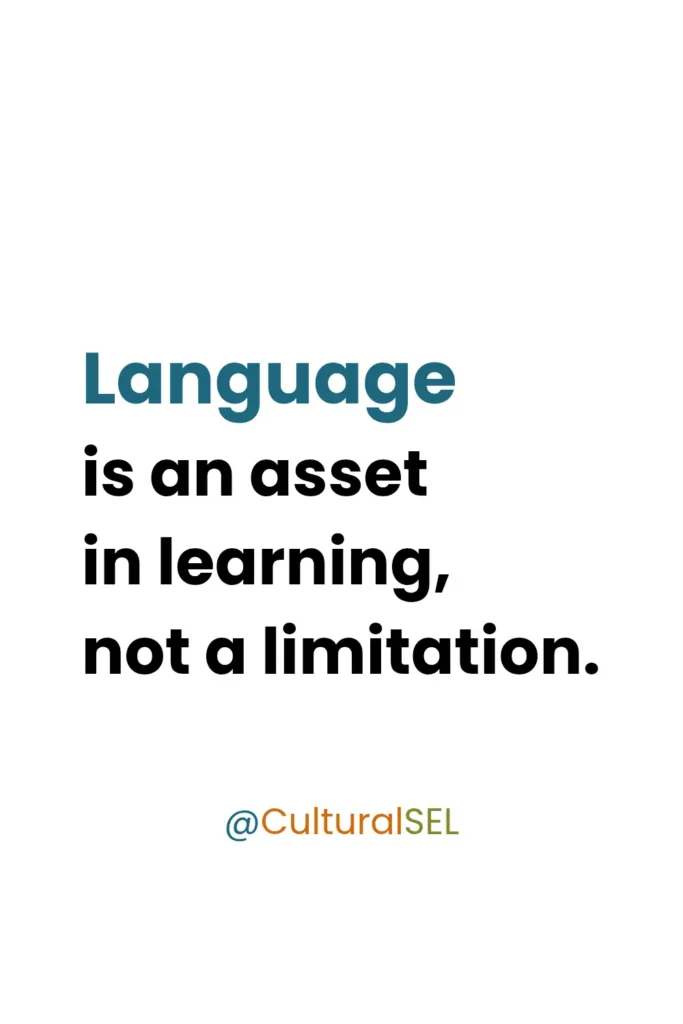
Supporting multicultural children’s social emotional learning is not about fixing differences or correcting identity.
It is about honoring identity, building confidence, and helping children see their cultural experiences as strengths.

Struggling to find children’s books for social and emotional learning that reflect culture and lived experience?
This FREE Culturally Responsive SEL Book List, with 80+ thoughtfully selected books, adds a culturally responsive layer to social and emotional learning by helping you choose stories that reflect identity, relationships, and experiences that are often overlooked.
Created for parents, educators, counselors, and caregivers who already value SEL and want book choices that reflect the full picture of children’s lives.
Supporting Social Emotional Learning in Multicultural Children
Many professionals and communities overlook the role of culture in shaping social-emotional learning (SEL).
When we think about SEL, we often imagine universal skills like empathy, self-control, and resilience.
But for multicultural children, those skills are deeply influenced by the cultures they live in, the languages they speak, and the values they balance at home and in school.
Unique SEL Challenges and Strengths
Multicultural children often experience unique SEL challenges and strengths, such as:
- Translating feelings and meaning across languages
- Adapting behavior depending on cultural setting
- Heightened sensitivity to cultural jokes, stereotypes, or exclusion
- Balancing family values with peer expectations
- Worrying about acceptance or standing out
- Feeling responsible for representing their culture positively
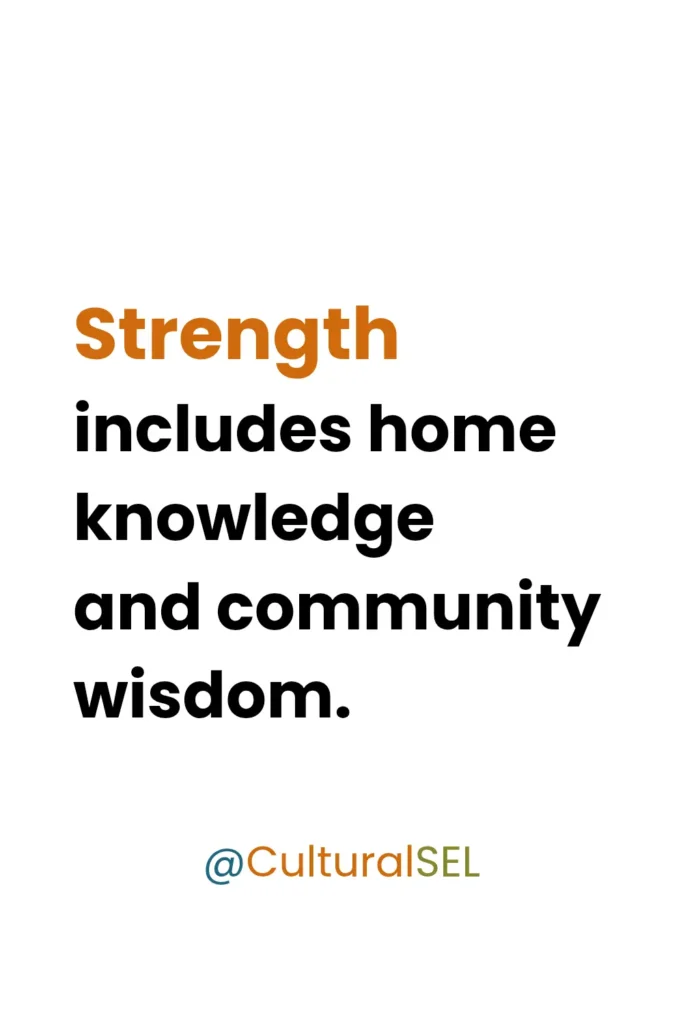
- Strong connection to family and community identity
- Early awareness of fairness, respect, and justice
- Expressing pride in heritage while seeking belonging
- Needing lessons and spaces that reflect cultural identity
These are not “problems”. They are lived realities that bring both complexity and strength.
Why Misunderstanding Hurts
As a mom and community member, I’ve seen how easily these needs can be misunderstood.
When a child’s cultural experiences are overlooked, their behaviors can be mislabeled as defiance, laziness, or lack of ability.
Instead of supporting their strengths, the focus becomes correcting behavior. This can harm a child’s confidence and their sense of belonging.
Families and schools sometimes try to “fix” what is not a problem at all, but rather a cultural difference.
This can be detrimental to a multicultural child’s well-being and success. Patience, understanding, and compassion are the keys to meaningful support.
Some children also carry added pressure tied to stereotypes, bias, or assumptions about their identity.
A child may be labeled defiant, passive, disruptive, or high-achieving based on expectations tied to race, ethnicity, religion, language, or immigration background.
Mixed-heritage children may feel pressure to explain who they are. Children from immigrant families may carry responsibilities that others do not see.
These patterns are not universal, but they are common enough that many families recognize them.
When social emotional learning does not account for these realities, children may internalize expectations that were never accurate to begin with.
In events organized through our PTA, I have heard parents from many backgrounds share similar concerns about the pressures their children navigate in everyday life.
A Black parent worried about how quickly behavior can be misunderstood.
An Asian parent describing pressure to appear quiet or high-achieving.
A Latinx family sharing frustration over assumptions about language ability.
A mixed-heritage child talked about uncertainty when asked to explain who they are.
Different stories, but a shared thread of wanting their children to be understood accurately.
Reframing Challenges Into Strengths
Each challenge listed above also points to a strength when it is nurtured:
- Translating across languages builds strong communication skills.
- Adapting behavior shows flexibility and cultural intelligence.
- Sensitivity to jokes or exclusion reflects deep awareness of fairness.
- Balancing values sharpens problem-solving and critical thinking.
- Representing culture fosters leadership and responsibility.
- Connection to family roots strengthens resilience and identity.
When adults see these experiences as strengths, they not only validate a child’s identity but also open the door to greater confidence and self-advocacy.
What Children Need
Children benefit most when the spaces around them reflect who they are. That means:
- Teachers using examples and stories that mirror different cultures
- Families having open conversations about feelings, identity, and belonging
- Peers learning to appreciate rather than judge cultural differences
- Children themselves are encouraged to name both their struggles and their strengths
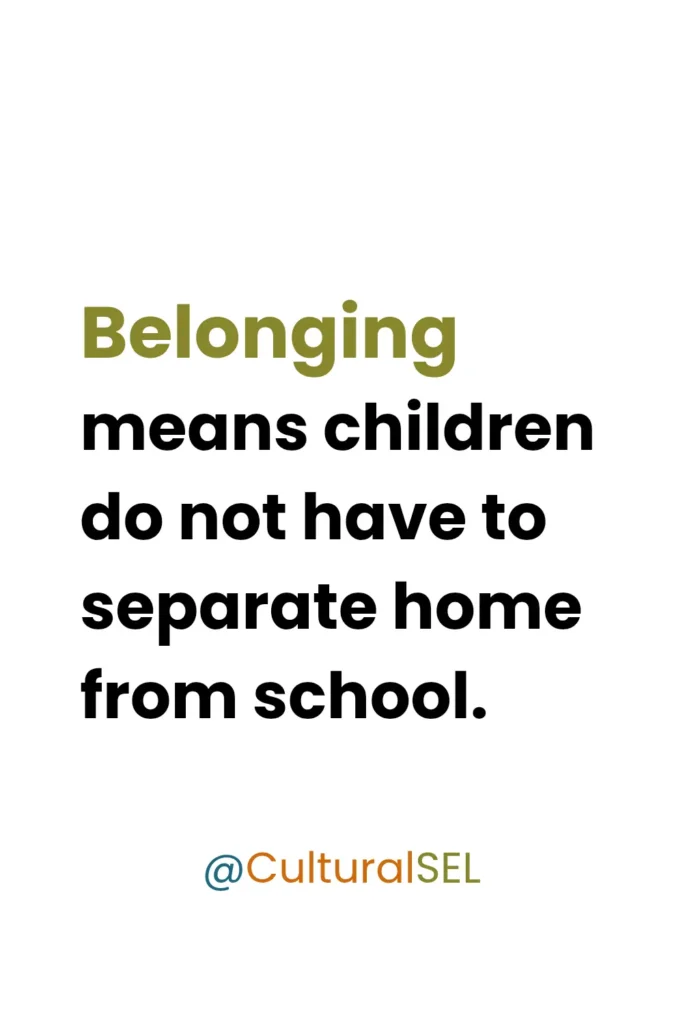
Multicultural children should not have to choose between belonging, fitting in, and being authentic.
Supporting their social and emotional needs helps them develop into empowered learners who can thrive in any environment.
What This Means for Families and Schools
Multicultural children often carry complex social and emotional experiences shaped by language, culture, and identity.
When these experiences are misunderstood, children may be mislabeled or pressured to change parts of themselves.
When they are understood, children gain confidence, clarity, and a stronger sense of belonging.
Recognizing these needs helps adults shift from correcting behavior to supporting the child as a whole.
“Confidence grows when identity is not questioned but celebrated.”
The question is not whether multicultural children can succeed socially and emotionally. They can and do. The real question is whether the adults in their lives are ready to see their differences as strengths.
By choosing patience, understanding, and compassion, we create classrooms, families, and communities in which every child’s identity is honored and their potential is fully supported.
If you are a parent, caregiver, or school community member supporting multicultural children, start by observing before correcting.
Ask what a child’s behavior might be communicating. Create space for culture, language, and family values within SEL conversations.
If you want more culturally responsive SEL reflections and tools rooted in lived experience and family connection, you can explore more resources here or join our community.
Questions Families Often Ask About Culturally Responsive SEL
Why do multicultural children experience SEL differently
Multicultural children often navigate multiple cultural expectations at home and in social settings. These differences shape how they express emotions, respond to authority, and build relationships.
Is this the same as culturally responsive SEL
This approach aligns with culturally responsive SEL but is grounded in family experience and everyday realities. It centers identity, belonging, and connection rather than programs or frameworks.
How can families support multicultural children’s SEL at home
Families can talk openly about feelings, cultural values, and identity. Sharing family stories, language, and traditions helps children build emotional clarity and confidence.
IF THIS POST RESONATES WITH YOU, EXPLORE MORE OF CULTURAL SEL ON OUR SITE.
You’ll find free guides, practical tools, and reflections to help families, educators, and communities bring culture, identity, and connection into social-emotional learning.
💬 Want to keep the conversation going? Join our Facebook community and connect with others exploring Culturally Responsive SEL.
📌 Save or share this post so other families and educators can bring these ideas into their own homes, classrooms, and communities.
Together, we can keep growing, connecting, and raising empowered learners.

Hello Everyone!
I’m Faith
Founder of Cultural SEL.
I create tools and resources that help families and educators connect identity, legacy, and social emotional learning in simple, practical ways.
My work is shaped by lived experience and intentional growth.
Read more here: https://culturalsel.com/about