Why Children Get Labeled Disrespectful Across Cultures and What Adults Can Do
A child rolls their eyes, speaks up, stays silent, or jumps in with an idea. An adult hears “attitude,” and the label lands fast: disrespectful.
That label can follow a child for years. It can shape how teachers respond, how classmates treat them, and how families experience school.
In many cases, the issue is not character. It is a mismatch between cultural communication rules and unspoken expectations.
Children are labeled disrespectful across cultures when adults interpret behavior using one cultural standard without clearly teaching local norms.
This is different from emotional regulation challenges or personality differences. It is about mismatched cultural expectations.
Being labeled disrespectful often means a child’s communication style does not match the expectations of that setting.
Many families feel defensive when they hear the word “disrespectful.” That reaction makes sense. No one wants their child defined by a label that may not reflect their intent.
This post explains why children get labeled disrespectful across cultures, what research shows about how children learn social norms, and how adults can respond in ways that protect dignity while maintaining standards.
FREE DOWNLOAD · REFLECTION GUIDE
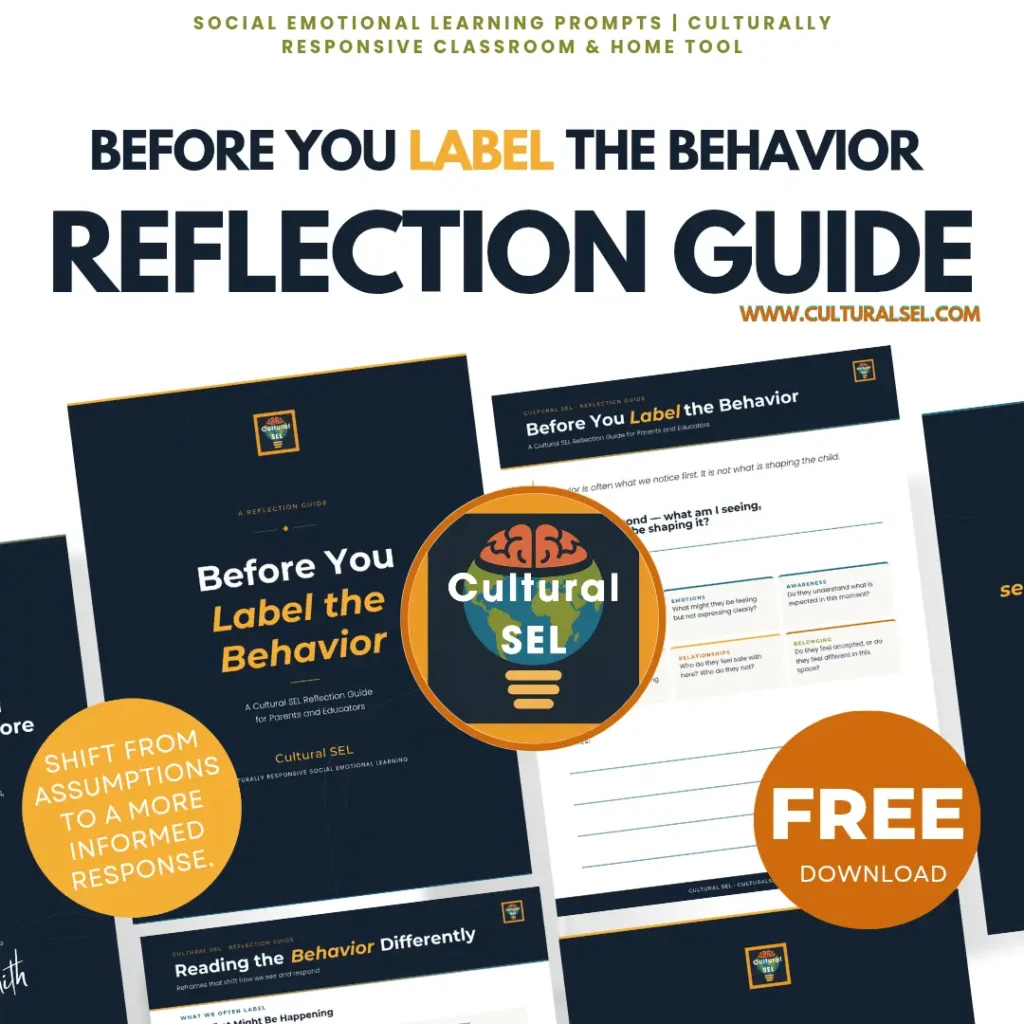
What if the behavior isn’t the whole story?
A free reflection guide that explores what may be influencing a child’s behavior before it is labeled, corrected, or misunderstood.
What It Means When a Child Is Labeled Disrespectful
When adults say a child is disrespectful, they usually mean one of three things:
- The child broke an unspoken rule.
- The child’s tone or timing did not match expectations.
- The child responded using norms learned in another setting.
The behavior may not match the setting. The rule was never clearly named.
A label points to a problem. Instruction makes the expectation visible and gives the child a clear next step.
When rules stay unspoken, children are judged for not knowing them. When rules are explained, children can adjust.
Respect Is Defined by Culture
The word respect sounds simple. The rules for showing it are not.
Adults often carry an invisible script for how children should behave. When a child follows a different script, adults may read it as rude, defiant, or challenging.
I have seen how quickly a cultural difference turns into a character judgment.
Common differences that trigger the disrespect label include:
- Speaking when spoken to. In some homes, children wait for a direct question. Jumping in may be viewed as pushy. In other homes, joining the conversation shows interest.
- Tone and confidence. A strong voice can signal leadership in one setting. In another, it may be described as talking back.
- Interrupting. Some communities teach strict turn-taking with adults. Others allow overlap and quick clarifying questions.
- Showing initiative. Taking charge may be praised as maturity. In other families, respect means waiting for adult direction.
- Eye contact. In some cultures, steady eye contact shows confidence. In others, less eye contact with elders shows respect.
When adults treat one style as the only polite style, they turn a cultural difference into a behavior problem.
This matters in classrooms where collaboration, self-advocacy, and leadership are taught as skills. The goal of those skills stays consistent. The way they appear can differ across communities.
Shop Our Culturally Responsive SEL Resources
Digital Cultural SEL resources for parents, caregivers, educators, community professionals, and children.
Explore practical tools, guides, reflection resources, and activities focused on social and emotional development, cultural environments, identity, belonging, relationships, lived experiences, and behavior.
Children Learn the Norms Adults Reward
Most disrespect labels show up in schools, where group rules have to be applied quickly.
Many expectations are unspoken. How long to hold eye contact. How loudly to speak. When to use titles. How to disagree.
When these rules are not named, children may be corrected for something they were never taught.
The risk of mislabeling increases when school norms reflect the culture most visible in that setting, while a child’s home norms differ. “Disrespect” becomes a shortcut for “not doing it our way.”
Research supports this pattern. A 2024 peer-reviewed study in Science Advances followed more than 400 children across the United States, Canada, Peru, Uganda, and Ecuador’s Shuar community.
The study found that children adjust to the behavioral patterns adults model and reward in their local communities.
A 2022 study in PNAS across eight societies found differences in how children respond to rule-breaking.
In some communities, children corrected classmates quickly for breaking social norms. In Leipzig, Germany, children intervened less often.
These differences show that children adapt to the norms modeled and reinforced in their local environment rather than following one universal behavioral pattern.
Children rely on the rules that have worked for them before. When they move between communities, even within the same city, those rules may not match the communication norms of the new setting.
With clear feedback and consistent modeling, children learn which behaviors are accepted in each setting.
Stress and Bias Influence Interpretation
Sometimes tone or refusal reflects stress. Trauma exposure can affect how safe a child feels with adult authority. A child may react quickly, shut down, or use a sharper tone. Adults may still label it disrespect.
Bias also shapes interpretation. The same behavior may be described as confident in one child and defiant in another. Culture plays a role, but so do race, disability, language, and power.
Quick labels increase the risk of mislabeling. Slowing down allows adults to clarify whether a rule was understood, whether stress played a role, or whether the behavior was intentional.
How Adults Can Respond Without Shaming
When someone says, “They’re disrespectful,” pause and ask what actually happened.
You can hold the expectation and still respond in a way that teaches rather than shames.
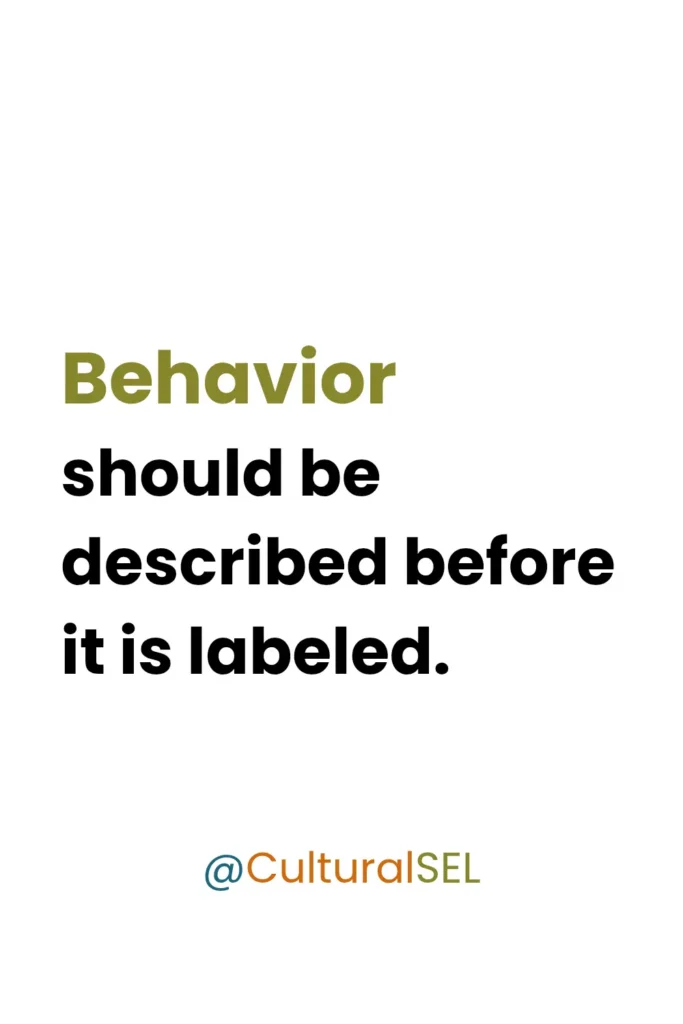
Name the Behavior, Not the Identity
Say:
“You interrupted.”
“Your voice got loud.”
Avoid:
“You’re rude.”
Behavior can change. Identity labels stick.
Check Meaning Before Judging Intent
Ask:
“What were you trying to say?”
“Help me understand what happened.”
Curiosity often reveals misunderstanding, not intent to disrespect.
State the Local Norm Clearly
“In this class, we raise a hand before speaking.”
“When you disagree, use a calm tone.”
Children cannot meet a standard that was never explained.
Offer a Do-Over
“Let’s try that again with a calmer voice.”
“Start again and raise your hand first.”
Do-overs teach regulation and repair.
Reflect and Plan
After the moment settles, ask what support was needed. Agree on a clear next step.
Keep the expectation. Teach the path.
Common Questions About Children Labeled Disrespectful Across Cultures
Why do some children talk back without meaning disrespect?
Some children use direct language at home. They may also be practicing independence. Teach phrasing and timing. Then check for stress triggers.
Is eye contact a sign of respect everywhere?
No. In some cultures, less eye contact with elders shows respect. Schools can accept different listening signals while still teaching shared expectations.
How can educators handle interruptions fairly?
Teach a clear routine first. Use participation supports such as “Write it down and share when called on.” Monitor who is corrected most often to reduce bias patterns.
What should families and schools say when conflict happens?
Ask about home expectations using neutral language. Share the school norm clearly. Create a shared plan focused on skills rather than blame.
Cultural Norm Mismatch Leads to Mislabeling
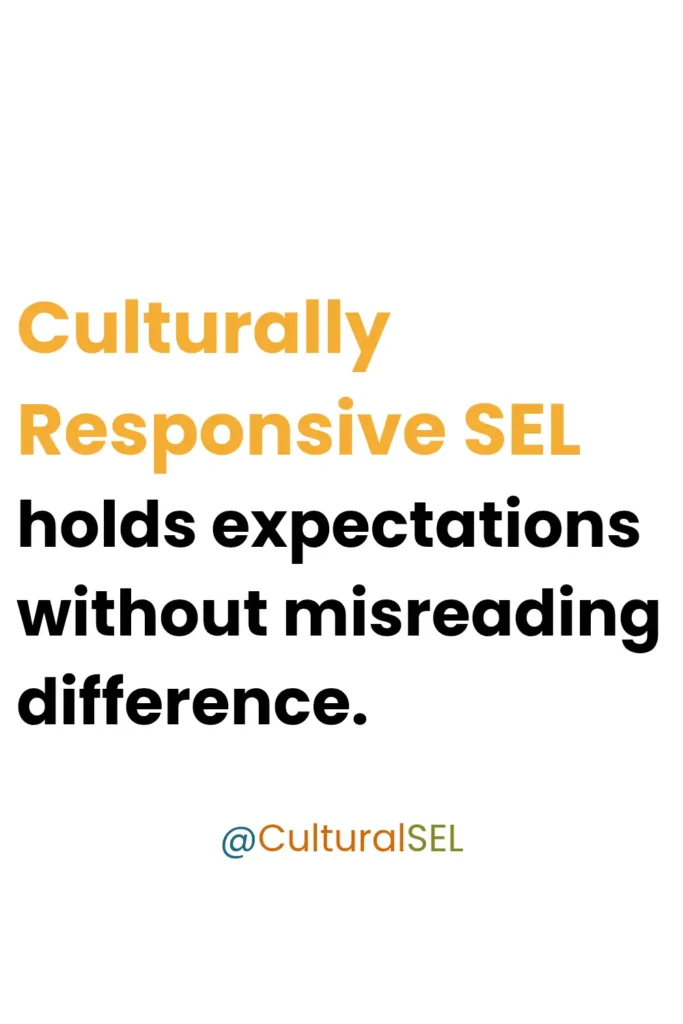
Children are often labeled disrespectful when cultural communication rules differ from the norms enforced in that setting.
Standards are strongest when they are clearly taught across cultures.
Clear expectations, explicit instruction, and dignity-based correction reduce mislabeling while maintaining accountability.
Norms about voice, silence, initiative, and eye contact come from family and community rules. Children follow what they have learned.
Replace the word “disrespectful” with one observable behavior and one teachable next step. Watch how behavior improves when adults name skills instead of identities.
CONTINUE EXPLORING CULTURAL SEL
Explore free Cultural SEL guides, culturally responsive SEL tools, and practical resources for understanding how cultural environments, identity, belonging, relationships, and lived experiences connect with children’s social and emotional development.
📌 Save or share this post with someone who is raising, teaching, or guiding children.

Hi, I’m Faith, the creator of Cultural SEL
I create practical tools and resources that support children’s social and emotional development and help parents, caregivers, educators, and community professionals look beyond behavior labels.
My work focuses on how cultural environments, identity, belonging, relationships, and lived experiences shape what children experience and how adults interpret and respond.
Read more about Faith and Cultural SEL: https://culturalsel.com/about
Join the Cultural SEL community: https://culturalsel.com/fb