7 Characteristics of a Culturally Responsive Classroom You Can See Every Day
What does a culturally responsive classroom look like on a regular Tuesday, not during a special assembly?
A culturally responsive classroom is defined by daily choices, how adults interpret behavior, invite participation, give feedback, and build belonging across cultural differences.
These characteristics show up on an ordinary Tuesday, not only during special events.
You can usually tell during transitions, corrections, group work, and independent tasks, how adults interpret behavior, how students are invited to participate, and how feedback sounds when someone makes a mistake.
These choices either build belonging or quietly push some students to the edge.
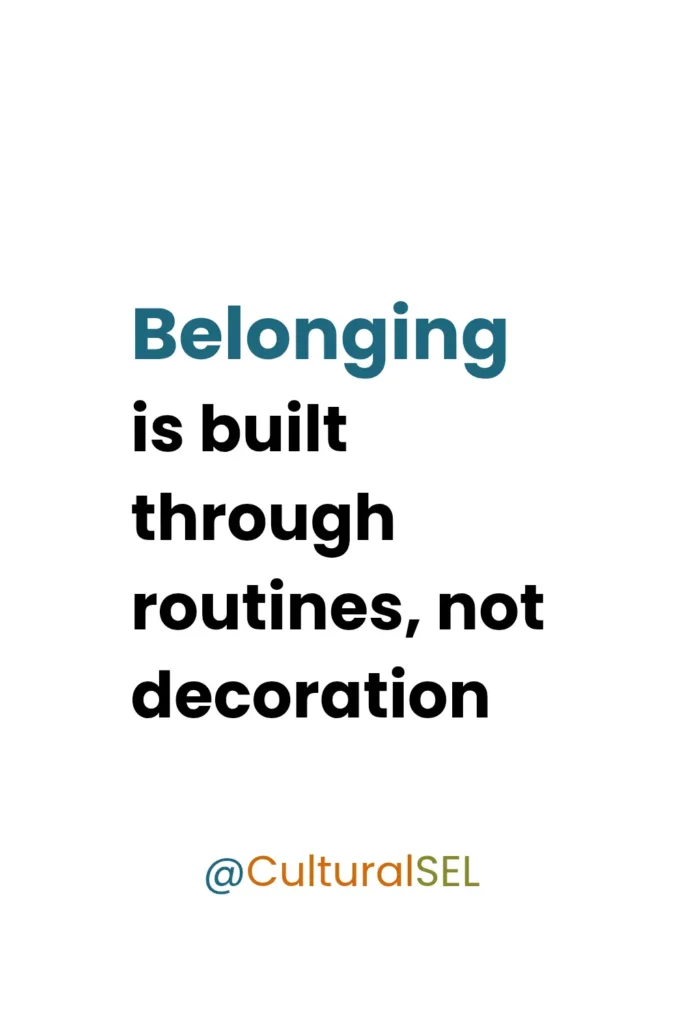
The most useful characteristics are not decorative. They are structural. They shape how students experience school each day, especially during conflict, group work, and routine interaction.
Below are seven characteristics that show up in daily practice, with clear examples you can use right away.
FREE DOWNLOAD · REFLECTION GUIDE
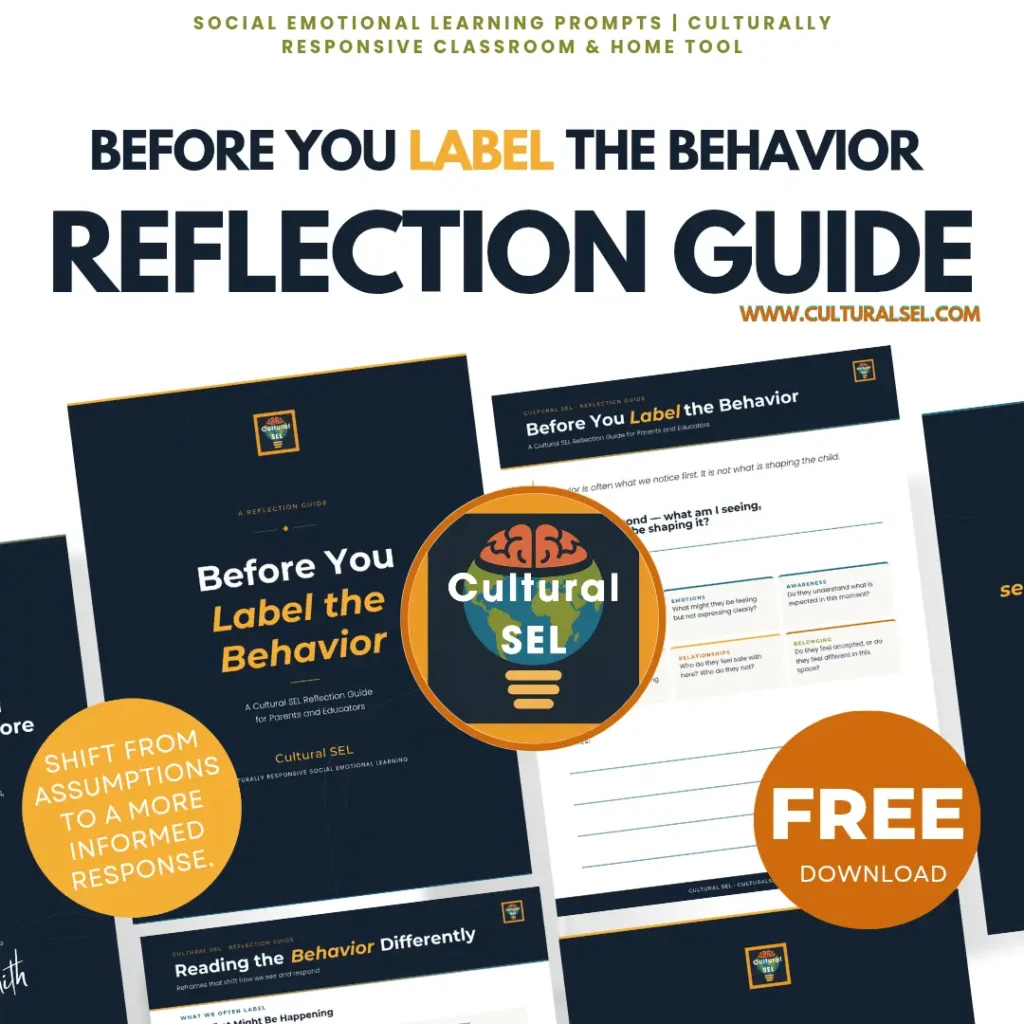
What if the behavior isn’t the whole story?
A free reflection guide that explores what may be influencing a child’s behavior before it is labeled, corrected, or misunderstood.
Clear Definitions of Behavior Across Cultural Contexts
Why vague words like “respectful” create confusion
Words like “respectful,” “appropriate,” or “defiant” can mean different things across cultures and homes. When expectations stay unclear, students end up guessing what the adult wants. That guesswork often turns into correction.
How observable behavior reduces discipline gaps
Observable expectations focus on behavior that can be seen or heard. They make feedback fairer because adults can point to specific actions instead of relying on interpretation. “Use a quiet voice during independent work” is easier to teach and coach than “Be respectful.”
Recent federal civil rights data shows measurable discipline disparities.
Black boys make up about 8 percent of K–12 students but account for about 22 percent of suspensions, and Black students are reported as about 3.8 times more likely to be suspended than white students.
When referrals rely on vague categories like “disruption,” unclear definitions increase the risk of unequal discipline.
What clarity looks like in classroom norms
Clear norms sound like short, teachable behaviors that students can practice. Teachers revisit them after breaks, before group tasks, and when new students join.
Adults also model them out loud so students hear what “ready to learn” looks like in real time.
Multiple Pathways for Participation
Verbal vs reflective participation
Participation does not have one correct style. Some students think out loud. Others need time to plan before speaking. A culturally responsive classroom offers options, speaking, writing, drawing, and partner talk, so students can show learning in more than one way.
Cultural pacing and response timing
Wait time matters, especially for students translating in their heads or choosing words carefully. Quick turn-taking can reward speed over thought. Slower pacing can improve accuracy and confidence.
Why speed is not the same as understanding
Fast answers can signal comfort, not mastery. Meanwhile, a student who pauses may be processing deeply.
Some students love to say “easy peasy” as soon as they finish. The phrase sounds confident, but confidence and comprehension are not always the same.
Teachers can separate “first to respond” from “most prepared” by using response cards, short written checks, or structured partner shares.
Language Differences Are Treated as Communication Differences
Code-switching during stress
Many students shift language patterns under stress, excitement, or conflict. That shift can sound rude to an adult who expects one style. Responsive teachers treat code-switching as a signal, then respond with calm, concrete language.
Emotional vocabulary gaps
Students may feel anger, fear, embarrassment, or frustration but have fewer words to name those emotions, especially across languages. “Mad,” “bad,” and “fine” can hide grief, worry, shame, or overwhelm. Teaching emotion words becomes part of instruction, not a side task.
Why translation of SEL terms matters
Terms in social-emotional learning do not always translate cleanly. Words like “self-advocacy” or “accountability” can land differently in families’ home languages. Schools can help by offering plain-language definitions and examples, not only direct translation.
Discipline Distinguishes Cultural Style from Skill Gaps
Style vs skill
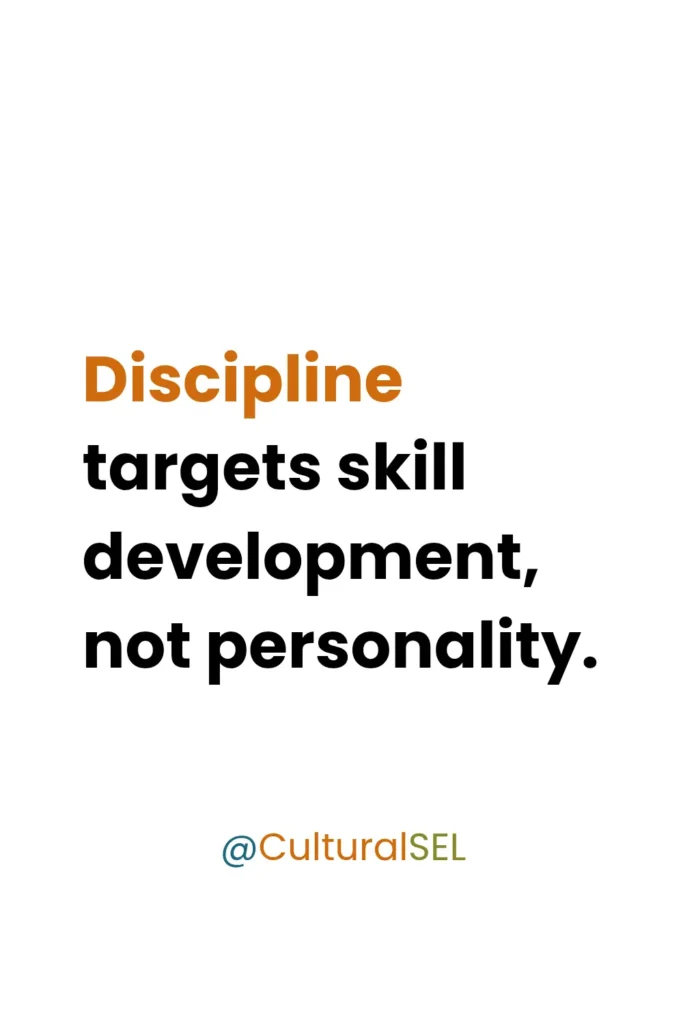
Some differences are style, volume, facial expression, eye contact, or debate norms. Other issues are skill gaps, interrupting, unsafe choices, hurtful words, or refusal to follow a safety routine. Daily practice improves when adults name which one they are addressing.
Pattern vs single incident
A single moment rarely tells the full story. Teachers look for patterns across settings, times of day, and tasks. That approach lowers the chance of turning one misunderstood interaction into a referral.
Questions educators should ask before referrals
Before writing a referral, teams can pause and ask:
What was the student trying to do?
What skill did they seem to lack?
What did the adult do right before the behavior?
What support would help next time?
When adults describe behavior in observable terms, students get coaching they can use and teams get data they can improve.
Identity Is Reflected in Daily Instruction
Representation in examples and historical framing
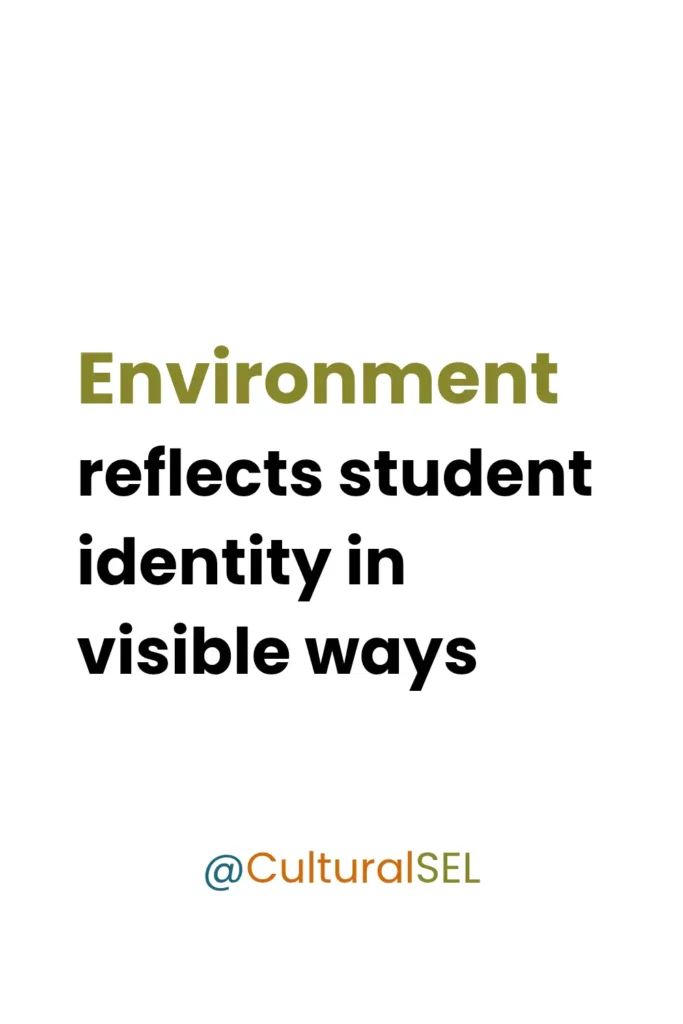
Representation shows up in the everyday examples, names in word problems, books, mentor texts, and who gets framed as a leader in history. Students notice whose lives get treated as normal.
Whose knowledge is centered
In a responsive classroom, students’ community knowledge counts as real knowledge. A lesson on measurement can include cooking traditions. A unit on persuasion can include speeches, chants, and storytelling styles from students’ cultures.
Normalizing multiple perspectives
Teachers plan for more than one valid way to explain thinking. Students can compare approaches without ranking cultures. This helps discussions stay curious, especially during topics tied to identity or current events.
Adult Reflection Is Built Into the System
These classroom characteristics depend on adult awareness, not just student behavior.
How interpretation habits form
Adults build habits quickly. After enough stressful days, the brain starts predicting problems. Reflection interrupts the habit of reacting quickly and allows adults to separate what they felt from what actually happened. It also helps adults notice when “I felt challenged” turned into “They were disrespectful.”
Peer conversations about bias
Reflection improves when it is a shared effort. Short, structured talks with a colleague help teachers test assumptions and reframe. The goal is clearer interpretation, not blame.
Data review for discipline patterns
Teams can review classroom and school data for patterns by location, time, and referral reason.
A referral is the written documentation a teacher submits when a behavior is serious enough to involve an administrator.
When those referrals cluster around vague categories like “disruption” or “defiance,” it signals a need for clearer norms and stronger teaching of skills.
Families Are Engaged as Partners in Social-Emotional Development
Why school language can confuse families
Families often hear school terms that feel unclear, “self-regulation,” “expected behavior,” “tiered supports.” Confusion can look like disengagement, even when families care deeply.
Explaining expectations clearly
Responsive communication uses simple descriptions and concrete examples. Instead of “Your child needs to show respect,” a teacher might say, “During group work, we are practicing taking turns and using a calm voice.”
Building shared vocabulary
Schools can send home short, consistent phrases for common routines, problem-solving steps, and repair language. When families and staff share common words, students get clearer support across settings.
What These Characteristics Look Like in Practice
Here is a quick view of daily actions that match culturally responsive practice:
- Classroom norms include observable definitions.
- Participation options include written, verbal, and collaborative formats.
- Repair conversations focus on skill, not identity.
- Family communication explains expectations clearly.
- Curriculum examples reflect multiple cultural contexts.
These are not large reforms. They are small instructional decisions we repeat every day.
How-To: A 15-Minute Reset You Can Run This Week
- Rewrite two vague norms such as “be respectful” into observable actions.
- Add one quiet participation option such as a sticky note, quick write, or partner share.
- Pick one common correction phrase and reword it as a teachable skill.
- Send one short message home explaining a routine in plain language.
Small moves, repeated daily, are what students experience as school. They do not experience mission statements or professional development plans.
They experience routines, tone, correction, and consistency.
Shop Our Culturally Responsive Social Emotional Learning Resources
Practical tools rooted in cultural awareness and trauma-informed practice.
Designed for educators, families, and facilitators guiding learning and skill development across classrooms, homes, and community spaces.
Why These Characteristics Matter for Student Outcomes
Belonging and engagement grow when students know what is expected and see themselves in the learning.
Clear norms and multiple participation options can also reduce avoidable conflict.
Over time, clear structures reduce discipline gaps tied to vague labels. Family partnerships grow when schools explain SEL expectations in plain language.
Frequently Asked Questions About Culturally Responsive Classrooms
What is the difference between culturally responsive teaching and SEL?
SEL teaches skills like emotion naming, problem-solving, and relationship repair. Culturally responsive teaching shapes how those skills are taught, practiced, and assessed across cultures.
Do I need a new curriculum to be culturally responsive?
Curriculum helps, although daily routines matter just as much. Start with observable norms, participation options, and clearer repair language.
How do I handle behavior without “policing” culture?
Describe the exact behavior. Teach the missing skill. Check for patterns before escalating. When you are unsure, ask a colleague to help you reframe what you observed.
The characteristics you establish shape what students experience as school.
A culturally responsive classroom is defined by daily choices, how adults interpret behavior, teach participation, and define expectations clearly.
Choose one routine this week. Make it observable. Teach it clearly. Repeat it consistently. Then pay attention to what changes and what still needs adjustment.
CONTINUE EXPLORING CULTURAL SEL
Explore free guides, practical tools, and resources designed to help adults understand how culture shapes children’s social and emotional experiences.
📌 Save or share this post with someone who is raising, teaching, or guiding children.

Hi, I’m Faith, the creator behind Cultural SEL.
I create tools and resources that help adults understand how cultural environments, identity, relationships, and lived experience shape children’s social and emotional experiences and influence how they are interpreted and supported.
Read more here: https://culturalsel.com/about
Join our community: https://culturalsel.com/fb