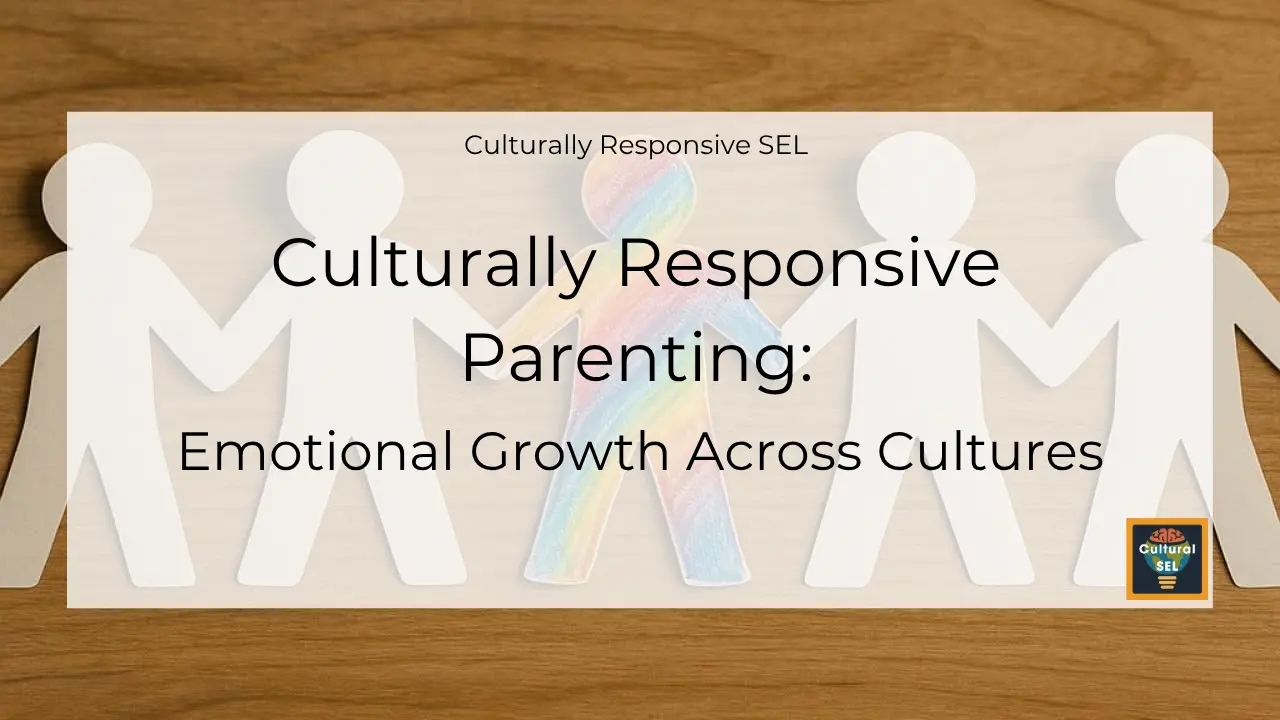
Culturally Responsive Parenting: How Children Express Emotions Across Cultures
Children start learning emotional skills long before school lessons, counseling sessions, or group activities.
They learn them at home, in daily routines, in family stories, and in the way adults respond to joy, anger, shame, and disappointment.
That is why culturally responsive parenting matters so much. Culture shapes how families teach respect, handle conflict, show care, and define responsibility.
For families raising children in diverse or multicultural settings, those lessons can either bring clarity or leave children feeling pulled in different directions.
This guide explains how parenting shapes how children express emotions across cultures while also protecting a child’s sense of identity and belonging.
When home values and outside expectations do not always match, clear and thoughtful parenting helps children stay grounded.
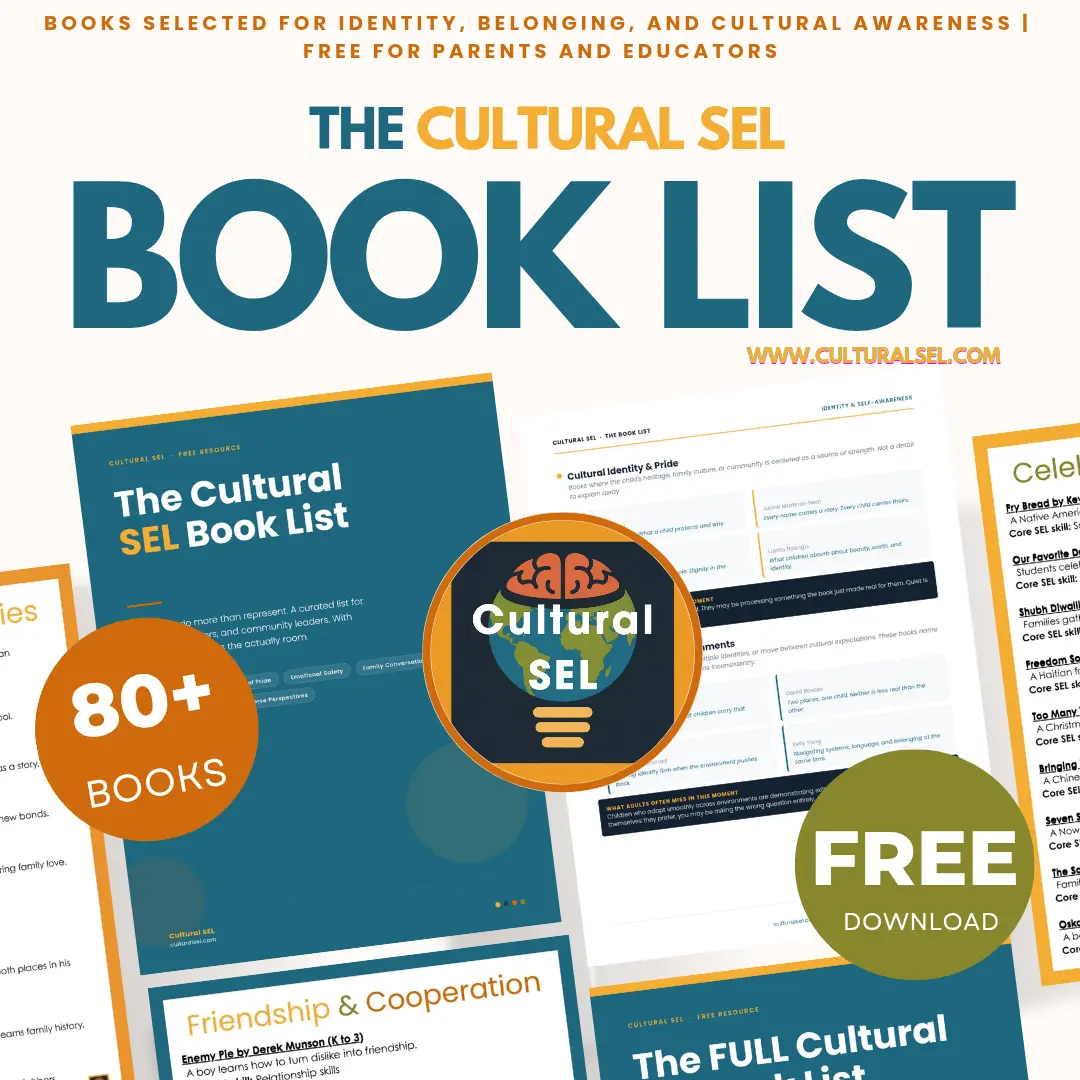
What if the right book still misses the child in front of you?
80+ books selected for identity, belonging, and cultural awareness. Each category includes what adults often miss, so you know how to use them, not just which ones to choose.
What Culturally Responsive Parenting Means in Everyday Family Life
Culturally responsive parenting means paying attention to how culture shapes family life, then using that awareness to guide children with purpose.
It shows up in ordinary moments, not only in big conversations about identity.
For example, one family may teach children to pause and stay quiet when upset, because calm self-control signals respect.
Another family may encourage children to speak openly about feelings right away. Both approaches teach emotional regulation, yet they do so through different cultural values.
Daily life carries these lessons. A child spills juice, loses a game, or argues with a sibling. In that moment, a parent teaches more than behavior.
The parent also teaches what the family believes about patience, apology, self-control, and dignity.
Children first understand emotions through close relationships. Family culture then shapes how those emotional lessons are interpreted and practiced.
When parents connect guidance to family values, children often feel more secure. They do not only hear rules. They understand why those rules matter in their home and community.
How Culturally Responsive Parenting Shapes Behavior Expectations
Behavior expectations often reflect culture. Some families place strong value on obedience and adult authority.
Others expect children to ask questions, explain feelings, and join decisions. These patterns grow from beliefs about respect, safety, and maturity.
Problems can arise when home and school send mixed messages. A child raised to avoid eye contact with adults may be seen as withdrawn in class.
Another child taught to speak confidently may be labeled disrespectful in a setting that expects more restraint.
This quick comparison shows how values may appear in daily parenting.
| Family Value | How It May Look at Home | Possible School Misread |
|---|---|---|
| Respect for elders | Waiting to speak, formal greetings | Seen as hesitant or passive |
| Independence | Speaking up, early decision-making | Seen as argumentative |
| Shared duty | Helping younger siblings, group focus | Seen as distracted from own work |
The point is not to rank one style over another. The point is to help children understand the code-switching they may need to do.
In conversations with families navigating multiple cultures, I often hear how children try to “get it right” in every setting. Without explanation, that effort can quietly turn into anxiety.
A parent might explain, “At home we greet adults first and speak after they invite us into the conversation.
In class, your teacher may expect you to share your ideas sooner so they can understand what you know.” When differences are explained this clearly, children are less likely to feel corrected for who they are.
Instead, they begin to recognize that expectations can change across environments.
Cultural Identity Influences Children’s Emotional Confidence and Choices
Children feel more confident when they know who they are and where they come from. Identity gives emotional lessons a place to land.
When parents connect emotions to heritage, children often remember the lesson more clearly. A family story about hardship can teach perseverance.
A proverb can teach patience. A faith practice can teach gratitude, repair, or humility. These messages stay with children because they link feeling, meaning, and memory.
For example, a parent might remind a child of a grandparent’s saying during a moment of frustration. That reminder does more than calm the situation. It communicates continuity and belonging.
Language matters too. Hearing family values in a home language can carry extra emotional weight.
Songs, naming traditions, food routines, and cultural celebrations may seem small, yet they help children connect identity with confidence and steadiness.
Children also notice when their culture is ignored or mocked. In those moments, parents can help them name the feeling and respond with clarity.
A child who hears that their cultural background has value is better prepared to handle social pressure.
Parenting Across Cultures Requires Multiple Social Skills
Many families teach children to move between cultural settings every day. Home may emphasize collective responsibility, while school rewards individual voice.
Extended family may expect formal respect, while peers expect casual communication. That requires emotional flexibility.
Children need help interpreting these environments without feeling they must divide themselves. Parents can support this by naming differences openly and offering clear explanations.
For example, parents may guide children on how expectations change during family gatherings, classroom discussions, or community events.
This clarity reduces guesswork and helps children adapt while maintaining a stable sense of self.
This challenge is often more visible in immigrant, mixed-heritage, multilingual, or transracial adoptive families.
Children in these contexts may encounter stereotypes or pressure to prioritize one identity over another.
With guidance, they can learn to adjust communication styles while remaining connected to family values.
Everyday Parenting Situations Become Cultural Learning Moments
Ordinary routines often hold the most meaningful teaching opportunities. A disagreement between siblings, a rushed morning, or a family visit can carry lessons about emotional expression and identity.
In sibling conflict, one parent may encourage direct emotional expression. Another may focus first on restoring group harmony.
Both approaches can support empathy, accountability, and repair when the reasoning is explained clearly.
Greeting elders offers another example. In some homes, children learn to use titles, lower their voice, or offer help immediately.
These practices teach respect, self-control, and social awareness while reinforcing cultural continuity.
Shared responsibilities also shape emotional growth. Helping with meals, caring for younger siblings, or completing household tasks can teach patience and responsibility.
Children learn that family life involves cooperation rather than individual achievement alone.
Consistent modeling matters more than perfect wording. When adults apologize, speak respectfully under stress, and explain values calmly, children absorb those patterns through repeated experience.
Practical Culturally Responsive Parenting Strategies for Emotional Development
Parents often ask what culturally responsive parenting looks like in daily practice. Small, steady habits usually make the biggest difference.
- Explain the purpose behind rules so children understand the value guiding expectations.
- Use family stories or sayings to illustrate patience, courage, or empathy.
- Name the setting when expectations differ between school, home, or community spaces.
- Maintain home language or traditions that reinforce emotional meaning.
- Discuss differences among peers to build respect and reduce judgment.
- Model pride in cultural identity while remaining open to learning from others.
These strategies work because they are practical and integrated into everyday routines. Emotional learning becomes part of lived experience rather than a separate lesson.
Long-Term Benefits of Culturally Responsive Parenting for Children
With consistent guidance, culturally responsive parenting can strengthen emotional resilience and social confidence.
Children who understand their family values often feel more secure when navigating diverse environments.
Shared traditions and intergenerational connections reinforce belonging during periods of change or stress.
Children also develop greater adaptability as they learn that expectations may vary across social contexts.
This approach can support empathy as well. When children understand their own cultural patterns, they are better able to recognize and respect differences in others.
Frequently Asked Questions About Culturally Responsive Parenting
How does culturally responsive parenting support emotional growth?
Culturally responsive parenting supports emotional growth by connecting behavior guidance to family values, language, and lived experience. Children understand expectations more clearly when emotional lessons reflect what they already recognize at home, which strengthens both regulation and confidence.
Do all families practice culturally responsive parenting?
All families operate within a cultural framework, whether they name it or not. Everyday routines, communication styles, and expectations reflect values that shape how children learn to express emotions and relate to others.
Can children balance home culture and school expectations?
Children can adapt to different expectations when adults explain those differences clearly. When guidance is consistent, children learn how to adjust their behavior across settings without feeling that their identity is being questioned.
How can parents start using culturally responsive parenting?
Parents can begin by explaining the meaning behind family expectations, using stories or examples children already understand. Small, consistent conversations help children connect emotional guidance to identity in practical ways.
“Children do not express emotions randomly. They follow what they have been taught about respect, voice, discipline and belonging at home.”
Culturally responsive parenting gives children a framework for both emotional development and identity awareness.
As families move through daily routines, small intentional moments can shape how children experience belonging and responsibility across different cultural settings.
Parents do not need perfect cultural scripts to support emotional growth. What matters is clarity, consistency, and a willingness to explain the meaning behind family expectations.
When children understand both their roots and the realities of the wider world, they are more prepared to respond with confidence rather than uncertainty.
These conversations help children carry their identity with strength and confidence across different environments.
CONTINUE EXPLORING CULTURAL SEL
Explore free Cultural SEL guides, culturally responsive SEL tools, and practical resources for understanding how cultural environments, identity, belonging, relationships, and lived experiences connect with children’s social and emotional development.
📌 Save or share this post with someone who is raising, teaching, or guiding children.

Hi, I’m Faith, the creator of Cultural SEL
I create practical tools and resources that support children’s social and emotional development and help parents, caregivers, educators, and community professionals look beyond behavior labels.
My work focuses on how cultural environments, identity, belonging, relationships, and lived experiences shape what children experience and how adults interpret and respond.
Read more about Faith and Cultural SEL: https://culturalsel.com/about
Join the Cultural SEL community: https://culturalsel.com/fb